

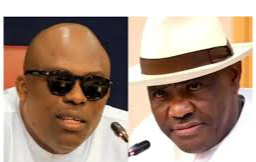
The Conference of Nigeria Political Parties (CNPP) and the Coalition of National Civil Society Organisations (CNCSOs) have raised serious concerns over the escalating political crisis in Rivers State, warning that it poses a significant threat to national peace, constitutional governance, and Nigeria’s democracy.
Briefing journalist on Monday, in Abuja, the groups argued that the turmoil in Rivers State is not the result of governance failure but a deliberate political attempt to seize control of the state through manipulation of the legislature.
Led by Baba Abubakar El-Nafaty, Chairman of the Elders Forum of the CNCSOs, the statement said the intervention was a “solemn patriotic duty” to defend constitutional democracy, protect the mandate of Rivers people, and prevent a dangerous political precedent.
“What is unfolding in Rivers State goes far beyond local politics. It represents a critical test of Nigeria’s commitment to constitutional governance, separation of powers, and democratic stability,” the groups said.
The groups said the impeachment moves against Governor Siminalayi Fubara lack constitutional merit, noting there is no evidence of gross misconduct or governance paralysis as required under Section 188 of the 1999 Constitution.
“Governor Fubara has not committed any act that meets the constitutional threshold for impeachment. There is no credible allegation of gross misconduct, no paralysis of governance, and no popular uprising demanding his removal,” they added.
The CNPP and CNCSOs accused the Rivers State House of Assembly of being used as a tool for political conquest rather than a defender of democracy, warning that such a trend could destabilise national peace.
The groups cautioned that allowing the Rivers State scenario to persist could set a dangerous precedent for other states, where state assemblies may become battlegrounds for elite power struggles, undermining federalism and threatening democratic stability.
“If every governor becomes vulnerable to impeachment at the whim of external political forces, where then is the sovereignty of the people?” the groupd asked.
The organisations also highlighted allegations that the crisis is linked to conditional political settlements, citing claims that the Minister of the Federal Capital Territory, Nyesom Wike, imposed terms on Governor Fubara to halt impeachment proceedings.
They said the conditions allegedly included the ratification of a list of commissioners reportedly submitted by the FCT Minister.
“These allegations suggest the crisis is not about governance or accountability but about control—control of federal allocations, internally generated revenue, and political power in Rivers State,” they stated.
Financial Accountability Concerns
The CNPP and CNCSOs disclosed that Rivers State received at least N254.37 billion from the Federation Account Allocation Committee during the six-month emergency rule, averaging N42.40 billion monthly.
They alleged that the House of Assembly’s probe into the expenditure of the Sole Administrator was merely cosmetic.
The groups further alleged that lawmakers loyal to the FCT Minister received as much as N350 million each from funds allegedly shared during the emergency rule, describing the situation as “a betrayal of public trust on a massive scale.”
Describing the crisis as a national emergency, the CNPP and CNCSOs urged President Bola Ahmed Tinubu to intervene urgently.
“Mr President, this is no longer just a Rivers State issue. It is a national democratic emergency,” they emphasized.
Warning that failure to act could legitimise legislative anarchy and encourage similar crises across the federation, the groups demanded the immediate termination of impeachment proceedings against Governor Fubara, independent investigations into the Rivers State House of Assembly, and a presidential probe into the alleged conditional settlements.
“Governor Siminalayi Fubara must be allowed to govern. Rivers State must be allowed to breathe. Nigeria’s democracy must be protected. Enough is enough. Let the Governor govern. Let Rivers State develop. Let Nigeria’s democracy survive,” they concluded.