

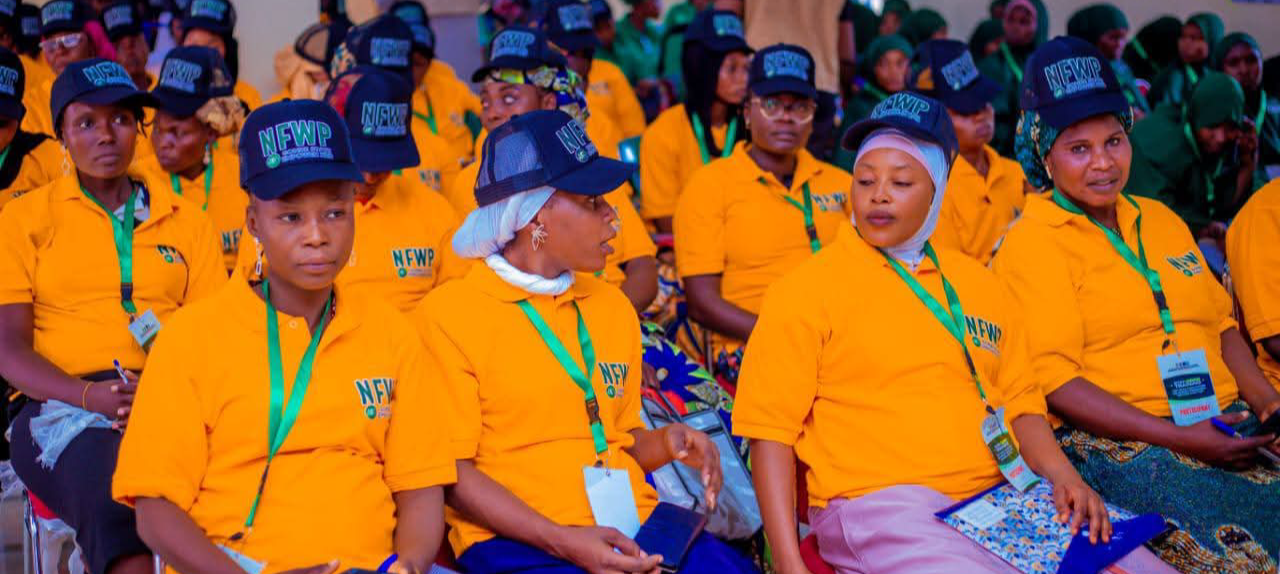
In Balanga Local Government Area of Gombe State one of the benefiting LGAs under the Nigeria for Women Project Scale-Up (NFWP-SU) a quiet but powerful transformation is taking shape as the training of Ward Facilitators came to a close, ushering in a new phase of action and community impact.
For several days, participants gathered not just to learn, but to connect, share experiences, and build the confidence needed to drive change at the grassroots.
The training sessions, filled with practical lessons and real-life scenarios, equipped them with the tools to engage their communities effectively.
With the training now concluded, expectations are high. These newly trained facilitators are returning to their communities not only with knowledge, but with a clear mission to mobilise women, form and strengthen Women Affinity Groups (WAGs), and support livelihood activities that can improve household incomes and economic resilience.
The atmosphere has shifted from learning to action, as facilitators prepare to step into their roles as guides, motivators, and connectors within their communities.
For many, this marks the beginning of a new journey one where they are expected to translate knowledge into impact, mobilise women into collective action, and create real opportunities that will strengthen families and transform communities across their wards.
For Maryam Bappa from Gelengu, the opportunity to become a Ward Facilitator is more than just a role it is a chance to change lives, starting with her own.
“I felt proud to be selected,” she said with a smile. “This programme has given us knowledge and confidence. I am ready to mobilise women in my community so we can grow together.”
Maryam is among the trained ward facilitators, equipped to organise women into structured Women Affinity Groups where they can save, access loans, and build sustainable livelihoods.
Like her, Maryam Abdullahi from Tallasse described the training as a turning point:
“This is an opportunity to support other women. When women are empowered, families and communities become stronger,” she said.
For Calister Daniel, the impact of the programme had already begun to show even before the training ended.
“I have started mobilising women to form groups,” she explained. “The sensitisation conducted before the training helped create awareness. Women are already coming together.”
Another facilitator, Salome Ayuba from Degri, expressed optimism, noting that the knowledge gained would guide them in building stronger and more united communities.
For Asamau Dakili from Maitungu, being selected from a remote community in Balanga is both an honour and a responsibility.
She expressed gratitude to the programme and the Gombe State Government for the opportunity, noting that women in such areas are often overlooked.
“I was selected from a remote area, and I will do my best as a Ward Facilitator to ensure that women, who are most often forgotten, are reached and supported,” she said.
The ward facilitators, who went through a rigorous assessment process, were selected from across the wards in Balanga, ensuring inclusiveness and representation in the implementation of the programme.
Beyond the facilitators, community leaders expressed confidence in the process. Representing the Ward Development Committees, Mr Bappah Kasuwa described the exercise as transparent and impactful.
He noted that the facilitators have now become role models within their communities and encouraged them to remain committed, disciplined, and focused in carrying out their responsibilities.
Also , Mr. Jothan Iyagumi from the Ministry of Women Affairs and Social Development highlighted the critical role of the newly trained Ward Facilitators in translating policy into action, ensuring that women across Balanga LGA have access to structured support, financial literacy, and livelihood opportunities.
“The success of this programme depends on the dedication of these facilitators,” he said, urging them to remain proactive, transparent, and fully engaged in mobilising women and strengthening community networks.
Behind these personal stories is a coordinated effort led by the State Project Coordinator, Hajiya Hauwa Adamu Saraki, who described the facilitators as the backbone of the programme at the grassroots.
“They will guide the formation of Women Affinity Groups, ensure transparency, and help women build trust and financial discipline,” she said.
The initiative, supported by the World Bank and the Gombe State Government under Muhammadu Inuwa Yahaya, is designed to improve women’s economic activities, strengthen livelihoods, and promote unity within communities.
At the local level, the Chairman of Balanga LGA, Salisu Ibrahim, described the programme as a pathway to development, urging facilitators to remain committed to their roles.
Traditional institutions also threw their weight behind the initiative.
The Bala Waja, Alhaji Mohammed Danjuma Mohammed, represented by Malam Isa Adamu Misal , praised the transparent recruitment process and encouraged facilitators to uphold integrity in their duties.
With each facilitator expected to oversee multiple Women Affinity Groups, the ripple effect is projected to reach thousands of women creating networks of support, savings, and shared growth.
For Maryam, Calister, Salome, Asamau, and many others, the journey has just begun but the goal is clear: stronger women, improved livelihoods, and more resilient communities across Balanga and beyond.