

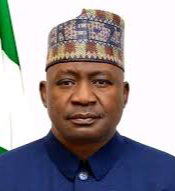
When President Bola Ahmed Tinubu appointed retired General Christopher Gwabin Musa as Minister of Defence, the move was widely received with optimism across the country.
His long military service and experience in counter-insurgency operations raised expectations that Nigeria’s worsening security situation would see a more decisive and coordinated response.
Nearly seven months into his tenure, however, public debate has intensified over the pace and impact of security reforms under his leadership.
Across several regions, insecurity remains a persistent challenge.
Incidents involving insurgent attacks, banditry, and kidnappings continue to be reported, sustaining public anxiety and raising questions about the effectiveness of ongoing security strategies.
In parts of Kaduna State, some community members have expressed disappointment, arguing that despite high-level engagements and public statements, tangible improvements in safety have not been sufficiently felt on the ground.
Since assuming office, General Musa has participated in multiple administrative and inter-agency meetings aimed at strengthening defence coordination. However, security analysts note that Nigerians are increasingly looking for more visible operational outcomes, particularly in regions most affected by violent crime.
Recent high-profile incidents have further heightened concern. These include the reported killing of a retired military officer while in captivity, as well as kidnappings involving schoolchildren and teachers in parts of Oyo State, alongside continued attacks and abductions reported in states such as Borno State and Kwara State. These events have reignited public debate over intelligence gathering, rescue coordination, and rapid response capabilities.
Citizens and observers say they expect more than expressions of sympathy following such tragedies, calling instead for stronger inter-agency collaboration, improved intelligence-driven operations, and measurable progress in reducing insecurity nationwide. Some critics also argue that leadership focus must shift more strongly toward field-based outcomes rather than predominantly administrative engagements.
At the same time, security experts acknowledge that Nigeria’s challenges are complex and long-standing, shaped by a mix of insurgency, criminal networks, and socio-economic pressures. They note that no single officeholder can resolve the crisis alone, but stress that leadership cohesion and public confidence remain essential to progress.
The optimism that accompanied General Musa’s appointment remains, but it is increasingly accompanied by heightened scrutiny. Many Nigerians continue to look to the Defence Ministry for clearer signs of strategic coordination and improved security outcomes.
Ultimately, observers say the Minister of Defence faces the task of translating expectations into visible results in a security environment where public patience is steadily thinning.
For General Christopher Gwabin Musa, analysts argue, the coming months may prove critical in shaping public assessment of his tenure and Nigeria’s broader security direction.