

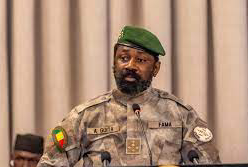
Over three years since Mali’s military first seized power, hopes for a swift return to democratic rule are rapidly fading. What began with promises of elections and political reform has since transformed into a prolonged military hold on power, stoking public frustration, silencing dissent, and fracturing trust in the country’s future.
Colonel Assimi Goïta, who emerged as the face of the junta following back-to-back coups in 2020 and 2021, had initially pledged to hand over power to civilians by February 2022. That deadline came and went, as did several others. Today, Malians are still waiting.
In a controversial turn last month, a national conference widely seen as influenced by the ruling junta recommended that Goïta remain in power for another five years.
The same conference also proposed dissolving all political parties, a move seen by analysts as an attempt to neutralize the opposition and consolidate control.
The government has yet to issue an official explanation. Mali’s Ministry of Security, as at the time of filing this report, have not comment on the decision or its implications.
For many Malians, the delay in returning to civilian governance is not just a political concern it’s a betrayal. What was once justified by the junta as necessary for stability and reform now appears to be a calculated effort to retain power.
“It’s becoming clear that the junta has no intention of leaving soon,” said one Bamako-based political analyst, who requested anonymity for fear of government reprisal. “They are dismantling the very institutions needed for a democratic transition.”
With political parties dissolved, legal resistance to the junta has become nearly impossible. Opposition leaders say they can no longer challenge decisions in court, as they lack official recognition under their former names. This legal erasure has effectively muzzled organized dissent.
The climate in Mali has grown increasingly repressive. Public demonstrations are rare, not because of lack of discontent, but due to a pervasive fear of arrest or retaliation. Activists report surveillance and intimidation, and few dare to speak out openly.
One former opposition member, now in hiding, said the threat is real. “If you criticize the regime, you risk being labeled an enemy of the state,” they said.
The junta’s supporters argue that extended military leadership is necessary to secure the country against Islamist insurgencies and internal instability. But critics contend that this justification is being used to indefinitely delay democratic reforms.
International observers warn that Mali’s democratic backsliding may set a dangerous precedent for the region, already marked by a string of military takeovers in neighboring countries.
Meanwhile, ordinary Malians continue to wait some with resignation, others with quiet resistance. “People still believe in democracy,” said a civil society leader. “But they no longer believe in promises.”
As Mali slips deeper into autocratic rule, the question is no longer when democracy will return, but whether it will return at all.
By Charles Akpeji