

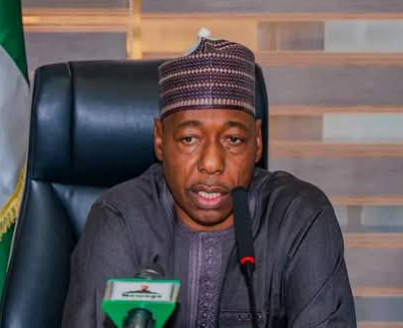
Borno State Governor, Professor Babagana Umara Zulum, has emphasized the importance of agricultural investment in tackling insurgency and conflict across Nigeria and Africa.
Speaking at a high-level panel discussion on “Public-Private and Development Partnerships for Agri-Food Transformation” at the International Institute of Tropical Agriculture (IITA) headquarters in Ibadan, Governor Zulum highlighted how agriculture can be a powerful tool for economic recovery and security.
The event, part of a three-day visit by Sierra Leone’s President Dr. Julius Maada Bio to Nigeria, aimed to explore innovative agricultural practices and strengthen partnerships between the two nations.
With Sierra Leone still recovering from past conflicts, the country is looking to Borno State’s agricultural initiatives as a model for resilience and post-crisis economic rebuilding.
Governor Zulum, speaking alongside Oyo State Governor Seyi Makinde and Plateau State Governor Caleb Mutfwang, outlined Borno’s significant investments in modern farming technology, including solar-powered irrigation and large-scale mechanized farming.
He noted that the state has deployed over 1,000 tractors, combine harvesters, and other machinery to boost food production and enhance economic development.
“My administration has invested significantly in agriculture. We currently have more than 1,000 tractors, combine harvesters, and other agricultural equipment capable of revitalizing the sector,” Zulum stated.
He further stressed that addressing insecurity requires tackling its root causes, including poverty and illiteracy. When he took office, many farmlands were abandoned due to the Boko Haram insurgency.
To reverse this trend, his government, according to him, established large-scale farms in relatively peaceful areas to restore agricultural productivity.
“The Boko Haram insurgency has triggered an acute humanitarian crisis, devastated our social and economic fabric, and deepened poverty in the region,” Zulum said. “To tackle insurgency, we must address its root causes.”
With increasing focus on agriculture as a means to drive economic stability and peace, Borno’s model, he said, will serve as a blueprint for other conflict-affected regions across Africa.