

By our correspondent
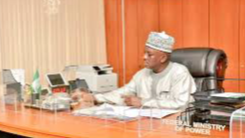
Supporters of the former Minister of Power, Engineer Sale Mamman, have called for a thorough investigation into the N33.8 billion money laundering allegations against him, insisting that the true perpetrators of the financial transactions must be identified.
In a statement issued in Jalingo on Friday, the group expressed concerns that the case against Mamman may be politically motivated. They pointed to recent courtroom developments at the Federal High Court in Abuja, particularly the testimony of a key prosecution witness, Abdullahi Suleiman, a Bureau de Change operator, which they argue weakens the case against the former minister.
According to the statement, during cross-examination by Mamman’s defense counsel, Femi Ate (SAN), Suleiman admitted that his companies had received payments both before and after Mamman’s tenure.
Signed by Jacob Sunkani, the supporters highlighted documents presented in court, revealing that funds were transferred to various entities—including Fullest Utility Concept, Platinum Touch Enterprise Ltd, and Silver Line Ocean Ventures between 2018 and 2022. Notably, they pointed out that some of these transactions occurred after Mamman left office on September 1, 2021.
The statement further disclosed that Suleiman had returned certain funds, including N217 million and an undisclosed sum in U.S. dollars, to the Economic and Financial Crimes Commission (EFCC). He reportedly stated that a third party, Maina Goje, had informed him that the EFCC was the intended recipient of the funds.
Under re-examination by EFCC counsel Rotimi Oyedepo (SAN), Suleiman admitted that the agency had told him the payments originated from the Ministry of Power. However, he acknowledged that transaction descriptions did not explicitly link the funds to the ministry, instead using vague terms such as “federal MI being payment for office consumer.”
The supporters also pointed out that Suleiman denied knowing Mamman personally or having any direct dealings with him.
“When asked how he associated the funds with Mamman, he reportedly stated that the EFCC had told him so,” the statement read. “Furthermore, when confronted with the fact that some payments were made after Mamman left office, Suleiman admitted that he had handed over the money to the EFCC.”
The statement has fueled skepticism, particularly in Mamman’s home state of Taraba, where many believe the allegations may be an attempt to scapegoat the former minister.
The group maintains that the funds in question were originally lodged at the Central Bank of Nigeria (CBN) by individuals who may have sought to implicate the Ministry of Power.
They insist that if credible evidence exists against Mamman, it should be presented transparently rather than relying on what they describe as “speculative allegations.”
As the trial continues, Mamman’s supporters reiterated their belief in the judicial process and called for a fair and impartial resolution of the case.