

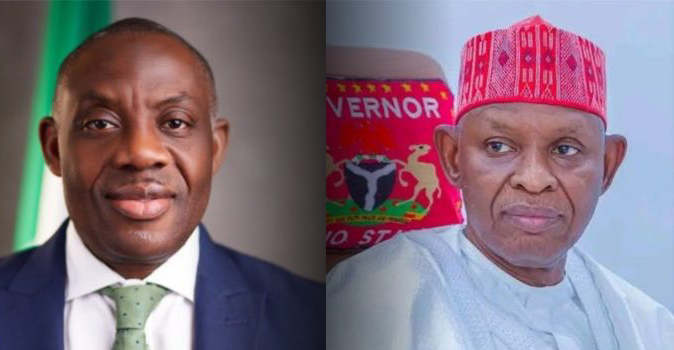
A major controversy is unfolding in Kano following allegations that politically connected figures, alongside officials in the Federal Ministry of Education, orchestrated the quiet transfer of 30 hectares of land belonging to Federal Government College Kano for private development.
The dispute, which has triggered national attention, pits the school’s alumni association against powerful interests said to be backing the deal. At stake is land described by stakeholders as critical to the institution’s future.
Presidential Petition and Rising Alarm
The Federal Government College Kano Old Students Association has formally petitioned Bola Ahmed Tinubu, calling for urgent intervention to halt what it terms a “backdoor concession” of federal educational property.
According to the association, the transaction—structured as a Public Private Partnership land swap—was concluded without transparency or consultation. Alumni leaders say they were neither informed nor engaged, despite their longstanding contributions to the school.
Tensions escalated further after revelations that a groundbreaking ceremony had already been slated for April 6, raising concerns about the speed and secrecy surrounding the deal.
At the center of the controversy is Pluck Global Company Ltd, the private firm reportedly tied to the project. The company is said to be co-owned by Musaddiq Ado Bala Talle, a known associate of Abba Kabir Yusuf.
Talle’s role as a member of Kano State’s Strategic Committee for its 2025–2029 investment plan has intensified suspicions of political influence in the transaction, with critics questioning whether due process was followed.
Speaking on behalf of the alumni body, FGCKOSA President Shoyinka Shodunke condemned the move, describing it as a dangerous precedent that prioritizes commercial interests over education.
He emphasized that the land earmarked for transfer is not surplus, but includes sports facilities and open spaces reserved for future expansion—assets considered vital to the school’s long-term development.
“This is not idle land,” the association stressed. “It is part of the institution’s foundation.”
Beyond ownership disputes, the alumni body has raised alarms over student safety and institutional planning. The proposed mixed-use development, they argue, could compromise the secure and controlled environment required for effective learning.
They also questioned the necessity of the project, noting that Kano State has ample land for real estate development without encroaching on federal school property.
“There is no justification for taking from an existing educational institution when alternatives clearly exist,” the petition states.
FGCKOSA has demanded full disclosure of all agreements between the Ministry and the private firm, including approval processes and contractual terms. The association warned it would pursue legal action and involve anti-corruption agencies if irregularities are confirmed.
In a rare move, the group also cautioned prospective investors against engaging in the project, citing the risk of litigation and possible reversal of the transaction.
As part of efforts to protect the school’s future, the association announced plans to launch a five-billion-naira development fund in June 2026. The initiative, to be managed through its foundation, aims to support infrastructure growth without sacrificing school land.
As of press time, the Federal Ministry of Education has not issued an official statement on the matter, leaving key questions unanswered and tensions continuing to rise.
For now, all eyes remain on the presidency as stakeholders await decisive action on a controversy that has reignited debate over transparency, public assets, and the future of Nigeria’s unity schools.