

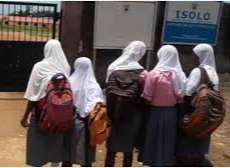
The Muslim Public Affairs Centre (MPAC) has raised serious concerns over an alleged case of religious discrimination involving Muslim female candidates at the Esther Oshikoya CBT Centre during the ongoing Unified Tertiary Matriculation Examination (UTME), triggering renewed debate over rights, compliance, and accountability in Nigeria’s examination system.
In a statement issued Thursday and signed by its Executive Chairman, Disu Kamor, the organisation alleged that several candidates, including one identified as Fatimah Salaudeen, were forced to remove their hijabs before being allowed into the examination hall.
MPAC described the development as unlawful and a violation of constitutionally guaranteed rights, stressing that it contradicts existing regulations set by the Joint Admissions and Matriculation Board (JAMB), the body responsible for conducting the UTME.
At the centre of the controversy is JAMB’s policy on candidates’ dress code, which explicitly permits the use of modest religious attire, including the hijab, provided such attire does not obstruct necessary security checks.
MPAC argues that the reported actions at the CBT centre represent a breakdown in adherence to these guidelines, raising questions about the consistency of policy implementation across examination centres nationwide.
“This is not merely an isolated incident,” the group suggested, warning that such occurrences may point to deeper systemic lapses in monitoring and enforcement.
Beyond policy concerns, the organisation emphasised the emotional and psychological toll on the affected candidates. According to MPAC, those involved were subjected to harassment and public humiliation at a crucial moment in their academic journey.
For many candidates, the UTME represents a gateway to higher education and future opportunities, making any form of disruption—especially one tied to identity and belief—particularly significant.
The case of Fatimah Salaudeen, cited in the statement, has since become symbolic of the broader concerns raised by the group about religious accommodation and respect for diversity within public institutions.
MPAC acknowledged that officials of JAMB, alongside security agencies, intervened after the situation escalated, restoring calm and allowing the affected candidates to proceed with their examinations.
However, the organisation maintained that the intervention, while necessary, does not negate the alleged violations already experienced. It insists that remedial actions taken on-site must be complemented by institutional accountability.
In response to the incident, MPAC has called on JAMB to launch a comprehensive investigation and make its findings public. The group is also demanding sanctions against the CBT centre and any personnel found culpable.
Additionally, it urged the examination body to reaffirm its policy on religious accommodation and strengthen enforcement mechanisms to prevent a recurrence.
Analysts note that how authorities respond to this case could influence public confidence in the fairness and integrity of the UTME process.
The incident has also reignited discussions around constitutional protections in Nigeria, particularly the right to freedom of thought, conscience, and religion.
MPAC warned that no candidate should be placed in a position where they must choose between their faith and access to education, describing such a scenario as incompatible with democratic principles and the rule of law.
As the UTME continues across the country, attention is now on JAMB and other relevant authorities to address the concerns raised and ensure uniform compliance across all accredited centres.
For stakeholders in the education sector, the controversy underscores the importance of balancing security protocols with respect for fundamental human rights—an issue likely to remain in focus as the examination exercise progresses.