

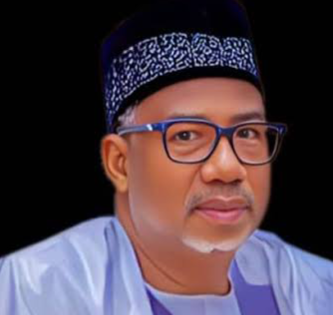
The lingering crisis within the Peoples Democratic Party (PDP) has taken a potentially decisive turn as Bauchi State Governor, Bala Abdulkadir Mohammed, openly signaled a possible exit from the party, raising fresh concerns about the opposition’s stability ahead of the 2027 general elections.
The governor’s position emerged following a high-level closed-door meeting at the Presidential Lodge in Bauchi with a delegation of the African Democratic Congress (ADC), led by former Secretary to the Government of the Federation, Babachir David Lawal.
The visit, political observers say, may mark the beginning of a significant realignment within Nigeria’s opposition landscape.
Governor Mohammed disclosed that extensive efforts to resolve internal disputes within the PDP—both at the national level and within Bauchi State—have failed to produce meaningful outcomes. The crisis, which has lingered for months, has fractured party unity and weakened confidence among key stakeholders.
To navigate the uncertainty, the governor revealed that two separate committees had been constituted in Abuja and Bauchi to assess the political future of his camp. Their mandate includes evaluating the viability of remaining within the PDP or seeking alignment with alternative political platforms.
Insiders suggest that the committees’ findings may play a crucial role in determining the governor’s next move, especially as political permutations ahead of 2027 begin to intensify.
“No Longer Tenable”
In a candid assessment of the situation, Mohammed indicated that remaining within the PDP under current conditions may no longer be sustainable.
According to him, operating in a political environment where his faction feels sidelined or unwelcome undermines both effectiveness and long-term political strategy. He emphasized the need to identify a credible and viable opposition platform capable of competing strongly in future elections.
The governor described the ADC as a “preferred destination,” though he stopped short of making a definitive commitment, noting that consultations and negotiations are still ongoing.
ADC Moves to Court Key Figure
Earlier, Lawal confirmed that the ADC delegation’s visit was initiated by the party’s national leadership as part of a broader strategy to strengthen its ranks ahead of the 2027 polls.
He characterized Governor Mohammed as a formidable and courageous political figure whose entry into the ADC would significantly enhance the party’s national profile and electoral prospects.
Lawal also used the opportunity to stress the urgency of opposition unity, warning that fragmentation among opposition forces could have serious implications for Nigeria’s democratic future.
The development comes shortly after Governor Mohammed convened a stakeholders’ meeting of the PDP in Bauchi, aimed at resolving internal disagreements and restoring cohesion within the party. However, the latest signals suggest that those efforts may have fallen short.
Analysts believe that Mohammed’s potential defection could trigger a ripple effect, particularly in the North-East and other regions where he wields considerable political influence. Such a move could further weaken the PDP while boosting the ADC’s credibility as an emerging opposition force.
With political activities gradually gathering momentum ahead of the 2027 general elections, the situation underscores the fluid and unpredictable nature of Nigeria’s political terrain.
For now, all eyes remain on Governor Mohammed as consultations continue—his eventual decision likely to shape not just the future of the PDP in Bauchi State, but the broader configuration of opposition politics in Nigeria.