

By Rebecca Caleb Maina
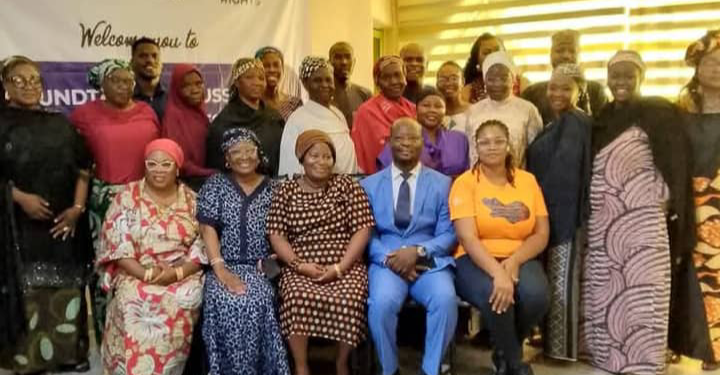
The Women Advocates Research and Documentation Centre (WARDC) has launched a Sexual and Reproductive Health and Rights (SRHR) Observatory during a roundtable discussion held at the Custodian Hotel in Gombe State.
The initiative aims to review progress on the 2020–2025 SRHR framework, monitor developments, policy gaps, and advocate for the protection and promotion of SRHR in Gombe
The event supported by Global Affairs Canada( GAC) and Centre for Reproductive Rights convened civil society groups, media organisations, healthcare professionals, and government representatives, who reaffirmed their commitment to advancing reproductive justice and tackling the urgent challenges surrounding unsafe termination of pregnancy.
In her opening remarks, the Director of WARDC Lagos, Mrs Mary George Peluola, described the launch of the Observatory as a “significant milestone” in the struggle for reproductive rights.
“Sexual and reproductive health rights are fundamental human rights, essential for individuals to make informed choices about their bodies, lives, and futures,The Observatory will be a beacon of hope, especially for those who have been marginalised or silenced. It will help hold duty-bearers accountable for their commitments.” Peluola said.
She noted that the Observatory would serve as a platform for research, advocacy, and community engagement, providing critical data and analysis to drive policy and social change.
Speaking via Zoom, the Founding Director of WARDC, Dr Abiola Akiyode-Afolabi, emphasised that the project is solely aimed at saving the lives of women and children who continue to suffer due to unsafe reproductive health practices and systemic neglect.
“This initiative is about protecting lives particularly those of women and girls who are disproportionately affected by unsafe termination of pregnancy and limited access to quality reproductive health services. We want to change that narrative by advocating for policies that prioritise women’s health and rights,” She said.
Dr Akiyode-Afolabi highlighted the urgent need for stronger institutional frameworks and accountability mechanisms to ensure that every woman, regardless of socio-economic background, has access to safe, legal, and affordable SRHR services.
Giving an overview of the SRHR project, Sheila Audu Ibrahim said the Observatory would promote laws and policies that uphold the rights of women and girls, while also holding the state and federal governments accountable for access to SRHR services, including safe termination of pregnancy.
“We want improved accountability from government actors, increased empowerment of adolescent girls and women, and ultimately, improved health outcomes. The Observatory is a tool for sustained advocacy and social change.”
She also spoke on the STOP (Safe Termination of Pregnancy) campaign of Gombe State has keyed into saying it a critical component of the broader SRHR project which seeks to destigmatise conversations around abortion and strengthen community-level advocacy.
“STOP stands for our collective demand to Stop The Oppression of Pregnant women through unsafe practices, discrimination, and policy silence. It is about ensuring that every woman and girl, regardless of where she lives or her economic status, has access to safe, legal, and supportive reproductive healthcare.”Ibrahim explained
A key highlight of the event was a presentation by.,Gombe State representative of the Society of Gynaecology and Obstetrics of Nigeria (SOGON), Dr Christopher Laima who spoke on the public health implications of unsafe terminations and outlined the legal provisions for safe procedures.
“Unsafe termination of pregnancy continues to be a leading cause of preventable maternal deaths in this country,We must confront this crisis with evidence-based policies and services that protect women’s lives and dignity.” Dr Laima added.
He explained that while Nigeria’s abortion laws remain restrictive, certain circumstances are allowed under the Violence Against Persons Prohibition (VAPP) Act and related legal interpretations.
“The law permits safe termination of pregnancy when the life, or physical or mental health of the woman, is at risk. This includes cases of rape, incest, suicidal tendencies, and where continuing the pregnancy could cause significant harm,These provisions exist to save lives, and health practitioners must be aware and willing to act within these legal grounds.” He explained.
He also underscored the importance of post-abortion care as a life-saving intervention.
“Every woman who undergoes a termination of pregnancy whether safe or unsafe has the right to access quality post-abortion care. This includes medical treatment, counselling, and contraceptive services to prevent repeat unintended pregnancies,” Dr Laima explained.
Providing an overview of the project, Sheila Audu Ibrahim said it seeks to promote laws and policies that uphold the rights of women and girls and improve government accountability both at state and federal levels on access to SRHR services, including safe termination of pregnancy.
She highlighted the expected outcomes as improved government accountability, the empowerment of adolescent girls and women, and sustained advocacy that enhances access to essential SRHR services.
Participants at the roundtable many of whom represented civil society organisations and the media pledged to strengthen advocacy and raise public awareness on safe termination of pregnancy and broader reproductive rights.
“We will use our platforms to educate the public and challenge harmful norms that put women at risk,” said Farida Dunaman of Salf Foundation.
“There is a need for continuous capacity building and strong community ownership to ensure sustainability,We don’t want this to end up like other projects that started well but faded out due to lack of long-term commitment.” Mrs Grace Macdonal of Teenages Empowerment Initiative
“The activities of quacks also need to be addressed, as they contribute significantly to unsafe termination of pregnancies and put women’s lives at risk,” Mrs Josephine Ogenyi of Kishimi Shelter Care Foundation
“The media has a crucial role to play in creating awareness, and the use of clear, accessible language is essential to ensure that the message resonates with and is understood by the target audience,”Comfort Mukollo of Nume Media Initiative for Development
The roundtable concluded with a collective commitment from stakeholders to support the Observatory and foster stronger collaboration towards a more equitable and responsive health system for all.