

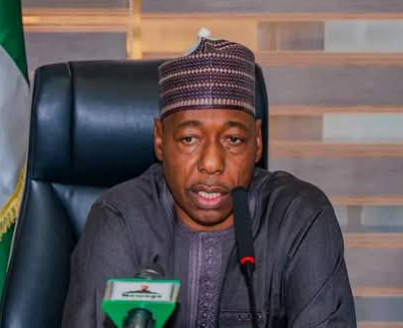
Governor Babagana Umara Zulum of Borno State has called on African leaders to transition from traditional rain-fed agriculture to climate-smart and irrigation-based farming systems as a critical step towards ensuring long-term food security across the continent.
Speaking at the 6th African Regional Conference of the International Commission on Irrigation and Drainage (ICID) held in Abuja on Monday, Governor Zulum emphasized the need for urgent reforms and sustainable investment in the agricultural sector.
“To feed ourselves sustainably, we must rethink how we grow our food,” Zulum stated. “Transitioning from rain-dependent systems to resilient, water-smart approaches is imperative. This includes embracing climate-smart agriculture and developing efficient and inclusive irrigation infrastructure.”
He outlined a comprehensive strategy to revitalize African agriculture, calling for policy reforms, enhanced financing, regional cooperation, and investments in water infrastructure. Zulum also advocated for the protection of water rights for communities dependent on shared water resources.
The governor highlighted the importance of empowering research institutions, promoting innovation, and increasing the involvement of women and youth in agriculture.
Citing Borno State’s experience, he shared how sustainable irrigation projects have helped rebuild communities in the post-conflict region.
Referencing the shrinking Lake Chad, which has lost nearly 90% of its size since the 1960s, Zulum warned of the dire consequences of climate change on regional stability and food security.
“Once a source of life for over 30 million people across Nigeria, Niger, Chad, and Cameroon, Lake Chad’s decline is a stark reminder that irrigation is not merely important, but indispensable,” he said, referencing data from the United Nations Environment Programme (UNEP).
He further noted that nearly 65% of farmland in Sub-Saharan Africa remains rain-fed, making it vulnerable to the unpredictable rainfall patterns caused by climate change. According to the Food and Agriculture Organization (FAO), this could lead to a 50% drop in crop yields by 2030.
Zulum also highlighted the broader impacts of climate change, including desertification, flooding, and the degradation of vital ecosystems.
He stressed the need for inclusive strategies that empower small holder farmers—who produce the bulk of Africa’s food supply—to adapt and thrive in a changing climate.
Despite the challenges, Governor Zulum expressed confidence in Africa’s resilience and capacity for innovation. He encouraged development partners to align their interventions with the continent’s long-term goals.
“Irrigation is not merely about water,” Zulum concluded. “It is about ensuring that a farmer in rural Mali, a herder in eastern Kenya, or a displaced family in the Lake Chad Basin can feed their children, live in dignity, and build a future. It is about peace and prosperity.”
The conference, as noticed by WorldClass247News, brought together dignitaries including the Secretary to the Government of the Federation, Senator George Akume; Minister of Water Resources and Sanitation, Professor Joseph Terlumun Utsev; and Head of Service of the Federation, Mrs. Esther Didi Walson-Jack.