

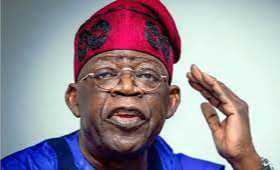
President Bola Ahmed Tinubu has called on global leaders to act with urgency and unity in confronting the climate crisis, declaring that the time for climate action “is not tomorrow; it is now.”
Speaking during a high-level virtual dialogue on climate change and a just energy transition, co-hosted by United Nations Secretary-General António Guterres and Brazilian President Luiz Inácio Lula da Silva, President Tinubu reaffirmed Nigeria’s commitment to integrating climate action with economic growth.
“The global climate emergency demands our collective, courageous, and sustained leadership,” President Tinubu said. “We view climate action not as a cost to development, but as a strategic imperative.”
The event brought together leaders from 17 countries and major regional blocs—including the African Union, ASEAN, the European Union, and the Alliance of Small Island States—as they prepare for COP30, set to be hosted in Brazil.
During his address from Abuja, Tinubu outlined Nigeria’s Energy Transition Plan (ETP), which aims to reach net-zero emissions by 2060. The ETP focuses on five key sectors—power, cooking, transportation, oil and gas, and industry—and identifies over $410 billion in financing needs to realize its goals.
He also highlighted Nigeria’s leadership role in the Mission 300 initiative, which seeks to deliver electricity to 300 million Africans by 2030, in partnership with the World Bank and African Development Bank.
Nigeria’s efforts include the National Energy Compact and the finalisation of the Nigeria Carbon Market Activation Policy, expected in March 2025. The policy is projected to unlock up to $2.5 billion in high-integrity carbon credits by 2030.
Tinubu announced that Nigeria is currently updating its Nationally Determined Contributions (NDCs) under the UN climate framework and plans to present a comprehensive revision by September 2025.
“We are also developing a Global Climate Change Investment Fund to blend public and private capital, de-risk green infrastructure, and finance clean energy solutions at scale,” the president said.
The fund will support initiatives such as green industrial hubs, e-mobility infrastructure, regenerative agriculture, and renewable energy mini-grids for underserved communities.
President Tinubu acknowledged international partners, including the UN and Sustainable Energy for All (SEforALL), for their support, emphasizing that “multilateral cooperation is crucial to effective climate delivery.”
“This is about leadership, delivery, and shared responsibility. We are ready to lead by example,” he concluded.