

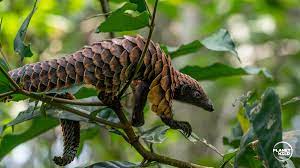
In the dense forests of Gashaka Gumti National Park, a ranger on patrol pauses at the sight of an unusual movement in the undergrowth. A pangolin—its delicate scales glistening under the dappled sunlight—shuffles cautiously, its long, sticky tongue flicking in search of ants. It’s a rare moment of encounter, yet one tinged with urgency.
Pangolins, the world’s most trafficked mammals, are disappearing fast, and conservationists like Tunde Morakinyo are sounding the alarm. As Nigeria marks World Pangolin Day, Morakinyo, the Executive Director of ANI Foundation, is leading the charge to protect these shy, nocturnal creatures from the relentless threats of poaching and habitat destruction.
“Nigeria has unfortunately become a major hub for illegal wildlife trade,” he explains, citing ANI Foundation’s 2022 report. The country, he says, plays a key role in a global black market worth £15 billion annually, where pangolin scales, ivory, and rosewood are smuggled out of Africa to meet international demand. “Weak laws, poor enforcement, and lack of resources are fueling this crisis,” he adds.
For years, ANI Foundation has worked alongside the National Park Service to strengthen conservation efforts, particularly in Gashaka Gumti and Okomu National Parks—two of the last refuges for Nigeria’s pangolins. The white-bellied and giant pangolin species still roam these protected areas, but their numbers are dwindling.
“Pangolins are nature’s pest controllers,” Morakinyo explains. “They keep insect populations in check, aerate the soil, and contribute to the health of the ecosystem. But they are being wiped out because of myths that their scales have medicinal value.”
Despite growing conservation efforts, the illegal trade continues to thrive. Across West and Central Africa, traffickers exploit loopholes, moving pangolin scales in massive shipments hidden among legal goods. Meanwhile, deforestation and climate change further threaten their survival.
However, not all hope is lost. Organizations like Pangolin Conservation Nigeria, the Nigerian Conservation Foundation (NCF), and the Wildlife Conservation Society (WCS) are joining forces with the Federal Ministry of Environment to combat trafficking and raise awareness.
On this year’s World Pangolin Day, ANI Foundation is calling for stronger laws, better enforcement, and a nationwide campaign to educate the public about pangolins’ ecological importance. Without immediate action, Morakinyo warns, these gentle creatures could vanish forever.
As Nigeria grapples with the challenges of protecting its rich biodiversity, the fate of the pangolin serves as a poignant reminder: conservation isn’t just about saving a single species—it’s about preserving the delicate balance of nature for generations to come.
By Charles Akpeji