

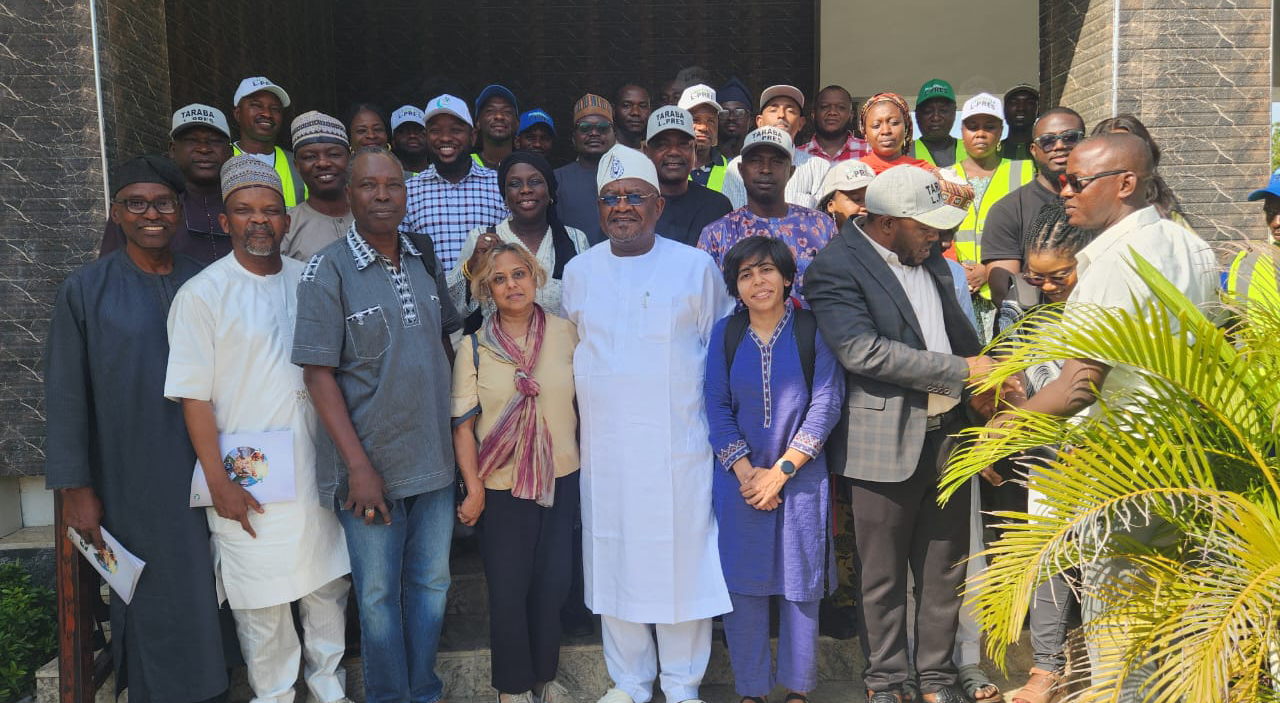
Taraba State has been selected as one of the five states in Nigeria to benefit from the World Bank-supported Livestock Productivity and Resilience Support Project (L-PRES), a major initiative aimed at enhancing livestock production and strengthening resilience in the agricultural sector.
Announcing the development during a World Bank implementation support mission in Jalingo on Tuesday, the National Project Coordinator of L-PRES, Dr. Sanusi Abubakar, revealed that Taraba will receive a minimum of $20 million in funding.
The funds, according to him, are intended to improve livestock services, upgrade infrastructure, and boost productivity across the state’s livestock industry.
Dr. Abubakar commended the Taraba State Government for its timely payment of counterpart funding, noting that it reflects a strong commitment to agricultural development. He assured Governor Agbu Kefas of the World Bank’s readiness to partner closely with the state to achieve its agricultural goals.
Also speaking at the event, Dr. Manievel E. Sene, Task Team Leader for L-PRES (TTL-LPRES), praised Taraba for its proactive engagement in World Bank-supported projects. He described the state as a model of agricultural innovation and reform.
Representing Governor Kefas, Secretary to the State Government (SSG) Barrister Gebon T. Kataps reaffirmed the administration’s commitment to the project’s success.
“We will leave no stone unturned in ensuring this project succeeds,” Kataps stated. “L-PRES has already contributed to noticeable improvements in cattle productivity, and we intend to build on that progress.”
Kataps also disclosed that, with the governor’s approval, a bill is underway to establish a University of Agriculture and Climate Change on the Mambilla Plateau. In addition, the state government plans to set up a Livestock Commission to further support and regulate the sector.
According to our correspondent, the L-PRES initiative is designed to address major challenges in Nigeria’s livestock sector by promoting climate-smart agriculture, improving productivity, and strengthening institutional capacity at both state and federal levels.