

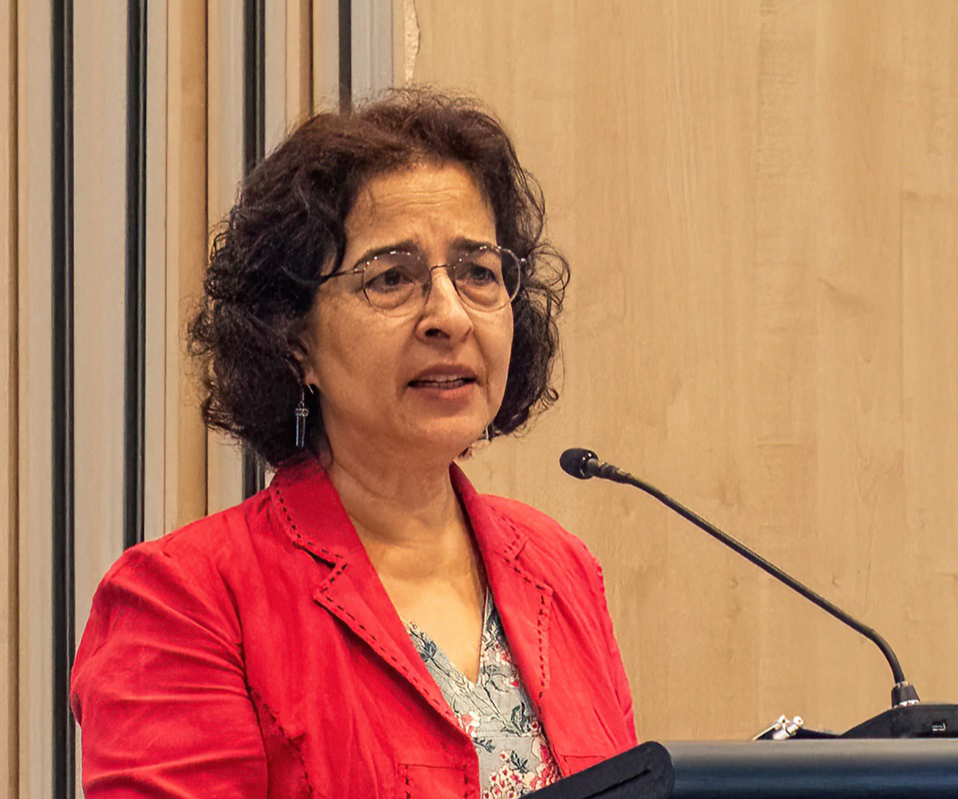
The Muslim Public Affairs Centre (MPAC) Nigeria has welcomed the end-of-mission statement of the United Nations Special Rapporteur on Freedom of Religion or Belief, Nazila Ghanea, describing her findings as an affirmation of its long-standing position on Nigeria’s security and religious freedom landscape.
Ghanea concluded her official visit to Nigeria, which took place from June 8 to June 19, 2026, with preliminary observations that MPAC says align with its own advocacy over the years.
The organisation said it received the statement “with a deep sense of vindication,” while stressing that the development should not be interpreted as triumphalism but as confirmation of evidence-based assessments it has previously advanced.
According to MPAC’s interpretation of the rapporteur’s remarks, Ghanea found no evidence of an intentional state policy aimed at destroying any religious community in Nigeria — the legal threshold for genocide under international law.
MPAC quoted her as stating that there was no indication of “a direct government instruction… with an intentionality of destroying one religious community or another.”
The group also highlighted her assessment that there is no evidence that violence in Nigeria constitutes state-directed religious persecution. Instead, it said the rapporteur acknowledged that both Muslims and Christians are among victims of insecurity across the country, with Muslims in some contexts also being disproportionately affected — a point MPAC says is often underreported in international media narratives.
A significant portion of MPAC’s response focused on what it described as the misuse of terms such as “genocide” and “persecution” in describing Nigeria’s security crisis.
While acknowledging that victims and communities often use such language to express the severity of their suffering, the organisation argued that these terms carry specific legal definitions and should not be applied loosely. “Empathy for suffering must not become a licence for legal and political misrepresentation,” MPAC said, warning that such framing risks distorting the realities of the conflict and deepening social divisions.
MPAC reiterated its long-standing position that Nigeria’s insecurity is driven by multiple structural factors rather than religious warfare. These, it said, include competition over resources, climate-related displacement, proliferation of small arms, weak state presence in rural areas, and governance failures.
The organisation maintained that reducing the crisis to a religious conflict between Christians and Muslims is “factually incomplete” and risks fuelling tensions.
Impunity and governance concerns
Central to MPAC’s statement was the issue of impunity, which it said aligns with concerns raised by the UN rapporteur.
The group argued that Nigeria’s inability to consistently investigate and prosecute perpetrators of violent crimes is undermining public trust and fostering perceptions of state complicity.
It cited the case of Ummulkhairi, a young woman who was reportedly lynched in Kaduna State, as an example of what it described as failures in accountability.
MPAC said arrests had been made but stressed that justice had yet to be fully served, calling for prosecution of those responsible and stronger institutional safeguards to prevent similar incidents.
MPAC urged the Federal Government of Nigeria to treat the UN rapporteur’s findings as a “strategic inflection point” for reform, particularly in strengthening justice and security institutions.
It also called on international partners to ensure that their engagement with Nigeria’s security situation is grounded in verified evidence rather than simplified or politicised narratives.
In a more direct appeal, the organisation singled out some American Evangelical Christian groups, accusing them of amplifying what it called a “Christian genocide” narrative. MPAC argued that such framing misrepresents Nigeria’s complex security realities and may inadvertently intensify local tensions.
It urged these organisations to instead support locally driven peacebuilding initiatives and avoid funding or amplifying actors that it believes contribute to polarisation.
MPAC said it would continue to advocate for what it described as an accurate and evidence-based understanding of Nigeria’s insecurity, grounded in human rights principles and national cohesion.
The organisation reaffirmed its commitment to defending the rights and safety of all Nigerians regardless of religion, and called for renewed political will to address insecurity, impunity, and governance gaps.
WorldClass247News, gathered that, the full report of the UN Special Rapporteur is expected to be formally submitted to the UN Human Rights Council in the coming months.