

By Becky Maina
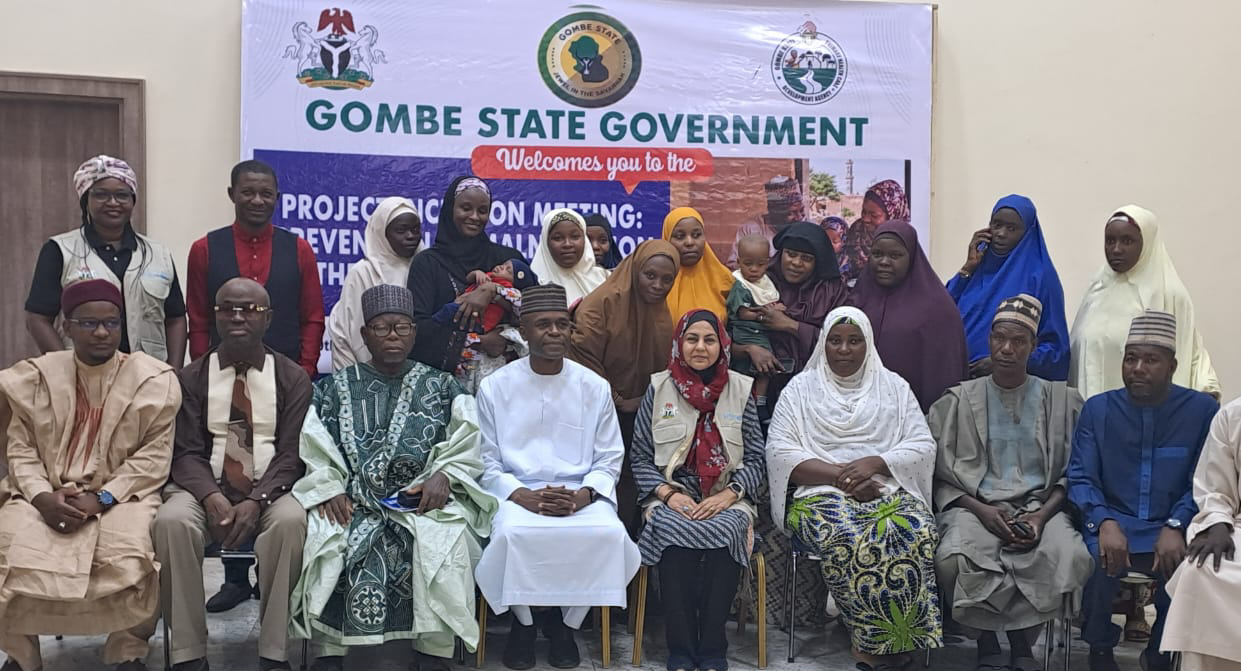
The Gombe State Government, in partnership with UNICEF and Latter-day Saints Charities (LDSC), has launched a major multi-sectoral project aimed at preventing malnutrition during the critical first 1,000 days of a child’s life.
The initiative, inaugurated at a high-level stakeholders’ meeting in Gombe, focuses on strengthening nutrition interventions from pregnancy through a child’s second birthday—a window widely recognized by global experts as the most pivotal stage for physical growth, brain development, and lifelong health.
Speaking at the launch, the Chief of the UNICEF Bauchi Field Office, Dr. Nuzhat Rafique emphasized that preventing malnutrition early is far more impactful and cost-effective than treating severe acute malnutrition after it occurs.
“No child should become malnourished in the first place,Dr. Rafique stated. “Once a child becomes malnourished, some of the losses in brain development and future potential cannot be fully recovered. We must build a strong prevention system.”
Dr. Rafique called for data-driven planning, improved domestic funding, enhanced hygiene practices, and robust community participation to ensure sustainable child health outcomes. She also urged the media to lead behavior-change communication across communities to encourage families to prioritize proper infant feeding and hygiene.
UNICEF Nutrition Specialist Philomena Irene echoed these sentiments, pointing out that preventive interventions carry a significantly lower financial burden on the healthcare system compared to late-stage emergency care, making early investment the smartest path forward for community development.
Inaugurating the project, the Executive Secretary of the Gombe State Primary Health Care Development Agency (SPHCDA), Dr. Abdulrahman Shuaibu, described the initiative as a timely step toward improving child survival and securing the state’s economic future.
“Malnutrition affects children’s growth, learning ability, and future productivity,” Dr. Shuaibu noted. “We must strengthen preventive measures through antenatal care, safe delivery, exclusive breastfeeding, and appropriate complementary feeding.”
He reaffirmed the Gombe State Government’s commitment to collaborating with development partners to expand maternal and child health services across all local government areas.
Aligned with the Federal Government’s Nutrition 774 Initiative (N-774), the Health Sector-Wide Approach (SWAp), and the National Food and Nutrition Policy, the LDSC-supported project will focus on three key areas:
Strengthening evidence-based planning, coordination, accountability, and domestic funding for nutrition at both state and LGA levels, reinforcing health, food, and social protection systems so that pregnant women and young children receive continuous, high-quality care, and engaging traditional and religious leaders, families, and grassroots networks to promote optimal infant and young child feeding practices (IYCF), including exclusive breastfeeding and timely, nutrient-dense complementary feeding.
With data from the 2023–2024 Nigeria Demographic and Health Survey (NDHS) highlighting ongoing nutritional challenges in the region, stakeholders reinforced that solving child malnutrition requires cross-sectoral action involving health, agriculture, water and sanitation (WASH), education, and local leadership.
The meeting concluded with a call for traditional rulers, civil society organizations, media partners, and government agencies to unite behind the 1,000-day windowensuring every child in Gombe State receives the foundation needed to survive, learn, and reach their full potential.