

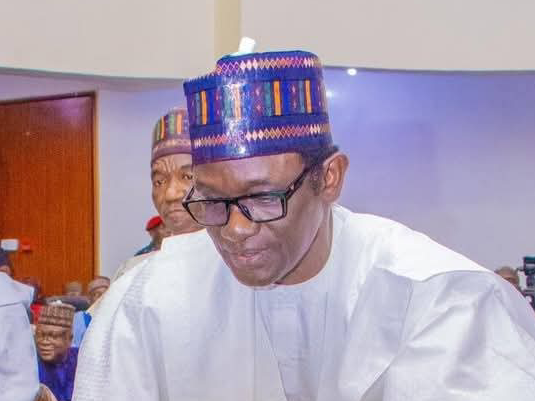
Governor Mai Mala Buni has presented a N515.58 billion budget proposal for Yobe State’s 2026 fiscal year, setting out a bold plan to accelerate infrastructure development, modernize healthcare delivery, and strengthen the state’s education sector.
Presenting the proposal, titled “Budget of Economic Growth and Infrastructural Transformation,” before the Yobe State House of Assembly, Governor Buni said the new budget seeks to “expand opportunities, empower citizens, and strengthen the foundation for long-term growth.”
The 2026 budget marks a substantial increase from the N320.81 billion approved for the outgoing year, signaling the administration’s intent to scale up investments in people-focused and growth-driven projects.
A breakdown of the proposal shows that N192.13 billion (37.3%) is earmarked for recurrent expenditure, while N323.46 billion (62.7%) will go to capital projects.
According to the governor, the capital-heavy allocation underscores his government’s focus on building lasting infrastructure in key sectors such as roads, schools, healthcare, water, electricity, and agriculture.
Among the key health projects planned for 2026 are a renal dialysis center in Gashua, designed to provide lifesaving treatment for kidney patients within the state, and a new General Hospital in Potiskum to ease congestion at the Specialist Hospital and improve access to quality medical services.
“These are projects that touch lives directly,” Buni stated. “We are building a healthcare system that our people can trust.”
He also noted that the outgoing fiscal year recorded significant progress in education, agriculture, road construction, electricity, and water supply, assuring citizens that his administration will consolidate these gains in 2026.
The proposal has been widely praised by political observers and community stakeholders, who described it as bold, people-centered, and reflective of Governor Buni’s commitment to sustainable development and good governance.
With this latest budget, analysts say the Buni administration continues to affirm that in Yobe State, development is not merely a promise but a continuous process.