

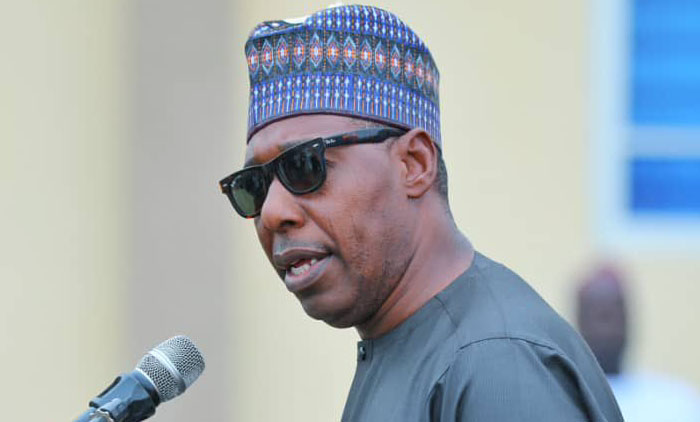
Borno state has taken an early step towards improving the welfare and spiritual experience of its pilgrims, with Governor Babagana Umara Zulum reaffirming his administration’s commitment to delivering a more efficient and seamless Hajj operation in 2027.
The governor made the pledge while receiving the report of the 2026 Hajj exercise from the Executive Chairman of the Borno State Hajj Commission, Professor Yakubu Yunus, at the Government House in Maiduguri.
The presentation of the report was more than a routine official engagement. It underscored the state’s resolve to institutionalise early planning, strengthen coordination, and build on the successes recorded during the last pilgrimage.
Governor Zulum commended the Hajj Commission for what he described as a successful 2026 operation, while assuring that the report would not merely be archived but carefully reviewed to identify areas requiring improvement.
“I am deeply honored to receive the report of the 2026 Hajj operations. We shall study it, make an in-depth analysis of what happened during the exercise and proffer ways on how to improve it,” the governor said.
Recognising the complexity of organising one of the world’s largest annual religious gatherings, governor Zulum stressed that preparations for the 2027 pilgrimage must begin immediately.
According to him, adequate planning remains the cornerstone of successful Hajj operations, especially in coordinating logistics, accommodation, transportation, and welfare services for thousands of intending pilgrims.
“We have to start the preparation for the 2027 Hajj now; we don’t have time. I am ready to provide all the necessary support to ensure that the 2027 Hajj is conducted without any hitch,” he stated.
The governor also identified inadequate coordination and synergy among members and officials of the Borno State Hajj Commission as one of the major challenges requiring urgent attention. He urged the commission to strengthen teamwork and improve institutional collaboration to enhance operational efficiency.
In addition, Zulum emphasised the need to improve the welfare and remuneration of commission members and officials, noting that a motivated workforce would be better positioned to provide quality services to pilgrims.
Building on Success
Earlier, the Executive Chairman of the Borno State Hajj Commission, Professor Yakubu Yunus, described the 2026 Hajj exercise as one of the most successful in the history of Borno state.
He attributed the achievement to the dedication, professionalism and teamwork demonstrated by officials of the commission throughout the pilgrimage.
“The 2026 Hajj exercise is one of the best in the history of Borno State, and this success was made possible through the collective commitment and hard work of the commission’s officials,” Yunus said.
He also acknowledged Governor Zulum’s consistent support for the commission, particularly his intervention in securing quality accommodation for Borno pilgrims in Makkah, as well as providing Hadaya and Ihram for pilgrims.
According to Yunus, these interventions significantly enhanced the comfort and overall experience of pilgrims from the state during the exercise.
The governor’s commitment to acting on the recommendations contained in the report reflects an approach centred on continuous improvement rather than celebrating past achievements alone.
With preparations for the 2027 Hajj expected to commence immediately, the state government hopes to build on the gains of the 2026 exercise through improved planning, stronger institutional coordination and enhanced welfare for officials responsible for managing the pilgrimage.
The renewed commitment is expected to further strengthen Borno State’s Hajj administration and ensure that future pilgrims benefit from more efficient services and better overall pilgrimage experiences.