

By Becky Maina
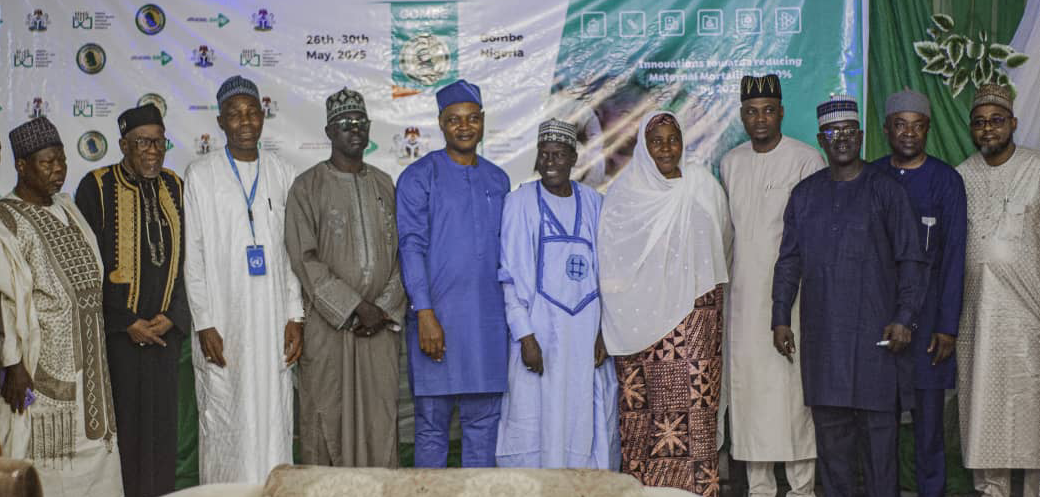
In a significant move to address the state’s high burden of maternal and neonatal mortality, the Gombe State Government, in collaboration with the Federal Government and development partners, convened a Co-Creation Workshop and Stakeholder Engagement Meeting to officially kick off the Maternal and Neonatal Mortality Reduction Innovation Initiative (MAMII).
The five day strategic gathering, organised with the support of the National MAMII Implementation brought together government officials, healthcare professionals, traditional and religious leaders, civil society organisations, and development partners. The aim was to co-design effective, community-led responses to the maternal health crisis in Gombe State.
Commissioner for Health, Dr. Habu Dahiru,in an address, described MAMII as a critical opportunity to galvanise collective action around preventing avoidable maternal and child deaths.
He noted that addressing the complex nature of maternal mortality requires a unified, coordinated effort.
“Every stakeholder has a role to play,” Dr. Dahiru stated. “Gombe State’s adoption of the Sector Wide Approach (SWAp) ensures a more streamlined and efficient response to maternal health needs.” He cited the state government’s recent investments in revitalising two Primary Health Care (PHC) centres in each Local Government Area and upgrading general hospitals across the three senatorial zones to specialist status.
Providing insight into the national scope of the initiative, National MAMII Coordinator, Dr. Dayo Adeyanju, explained that eight Local Government Areas in Gombe State are among the 172 high-burden areas for maternal mortality nationwide.
He said MAMII offers a data-driven and targeted response designed to address the most pressing local challenges contributing to maternal and neonatal deaths.
According to Dr. Adeyanju, the initiative seeks to improve community access to maternal healthcare, eliminate physical and financial obstacles, strengthen emergency obstetric and newborn care services, improve data intelligence and death surveillance, and foster enabling environments through male engagement and community incentives.
He stressed that every pregnant woman in the identified LGAs must be supported from conception to delivery through antenatal care and skilled birth attendance. “MAMII is a Federal Government initiative focused on saving lives,” he said. “What sets it apart is its structure it is not imposed, but co-created with states and implemented through performance-based strategies.”
Dr. Adeyanju also acknowledged Gombe State’s complementary efforts, including the State Emergency Medical Service and Ambulance Scheme (SEMSAS) and the Rapid Emergency Maternal and Newborn Response Teams (RESMAT), which are already helping to improve emergency response and remove access barriers.
In outlining the goals of the workshop, State SWAp Coordinator, Dr. Suraj Abdulkarim, said the meeting was intended to familiarise stakeholders with MAMII’s intervention areas, deepen understanding of local causes of maternal and neonatal mortality, and collaboratively develop implementation strategies tailored to Gombe’s context.
He underscored the need for a multi-sectoral approach, highlighting the roles of the health sector alongside education, women’s affairs, traditional institutions, media, and civil society in achieving sustainable impact.
The representative of the Clinton Health Access Initiative (CHAI),Hajiya Zainab Mohammad reiterated her organization’s unwavering commitment to supporting MAMII in its efforts to reduce and ultimately eliminate preventable deaths among women and children.
She emphasized the importance of collaborative action and sustained investment in maternal and child health interventions to achieve lasting impact.
Our correspondent reports that the five-day training will include field visits to health facilities and communities, where participants will interact with clients and traditional leaders to document strengths, weaknesses, and possible solutions.