

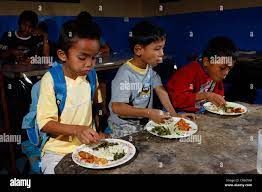
The head of Indonesia’s free nutritious meals program has announced that the country requires an additional 100 trillion rupiah ($6.11 billion) to expand the initiative and reach over a quarter of its population by the end of 2025.
Dadan Hindayana, who oversees the program, said President Prabowo Subianto is pushing to accelerate the rollout, aiming to benefit nearly 83 million people in Indonesia’s population of 280 million much earlier than the original 2029 target.
The program, a centerpiece of Prabowo’s 2024 election campaign, has faced scrutiny from financial markets. Analysts warn that the potential need for increased borrowing to fund the expansion could undermine Indonesia’s hard-earned reputation for fiscal discipline.
Currently budgeted at 71 trillion rupiah, the program was initially designed for gradual implementation, beginning with meals for 17.5 million recipients. The rollout started earlier this month, targeting school children and pregnant women, with 570,000 individuals served on its first day.
“Why is the president restless? Because many children have not received the meals,” Hindayana said during a press briefing following a meeting with Prabowo. “He is considering speeding up the process so that by the end of 2025, 82.9 million will benefit.”
The proposed expansion hinges on securing the additional 100 trillion rupiah by September, Hindayana added. However, it remains unclear whether Prabowo has approved the request.
Home Affairs Minister Tito Karnavian suggested that around 5 trillion rupiah of the required funding could be sourced from city or provincial governments with strong fiscal positions.
The government’s budget for 2025 projects a deficit of 2.53% of gross domestic product, staying within the legal limit of 3%. However, fiscal management challenges have intensified following Prabowo’s decision to cancel a planned value-added tax hike last year.
The finance ministry has indicated that 45.4 trillion rupiah in excess cash from 2024 could be used to address funding gaps this year. Still, the program’s full implementation is estimated to cost 450 trillion rupiah ($27.51 billion), as stated during Prabowo’s campaign rallies.
As the government weighs its options, WorldClass247News, observed that the ambitious program underscores the balancing act between addressing pressing social needs and maintaining fiscal stability in Southeast Asia’s largest economy.