

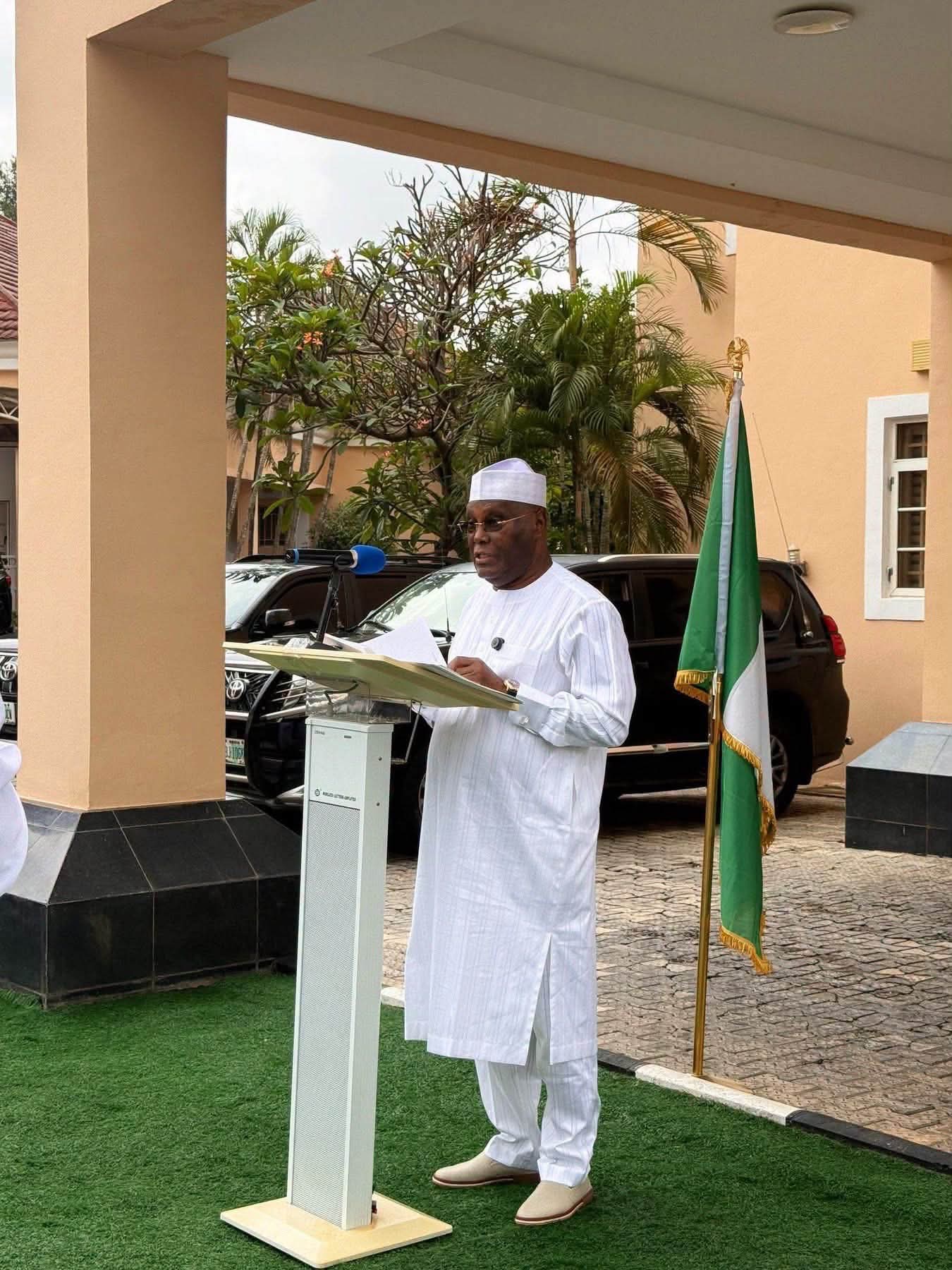
Former Vice President Atiku Abubakar has urged President Bola Tinubu to take immediate steps to reduce the price of petrol and ease the rising cost of living confronting Nigerians.
Atiku made the call in a statement titled, “Address on Fuel Prices, Palliatives and the Cost of Living,” in which he criticised the continued hardship attributed to the removal of petrol subsidy since May 2023.
He said the impact of high petrol prices had spread across the economy, raising transportation, food, production and logistics costs while reducing the purchasing power of households.
According to him, farmers, traders, workers, manufacturers and other businesses are bearing the consequences of increased energy and transportation costs, with the burden ultimately transferred to consumers.
Atiku said government must assess economic reforms based on their impact on the living conditions and purchasing power of Nigerians, rather than relying solely on indicators such as GDP growth, government revenue and allocations.
He recalled that when he previously advocated government intervention to reduce petrol prices, Tinubu dismissed the proposal as demonstrating “serious ignorance” of governance and the economy.
Atiku, however, said subsequent developments had shown that concerns over the impact of high fuel prices were not limited to him, pointing to calls by organised labour, petroleum marketers, manufacturers and ordinary Nigerians for measures to reduce the burden.
He urged the President to demonstrate the willingness to review policies where necessary, stressing that “leadership requires the humility to confront the consequences of policy and the courage to change course.”
The former vice president also criticised the reliance on palliatives as a response to economic hardship, saying emergency assistance could not replace sound economic policies.
“Palliatives manage pain. Good policy addresses the source of the pain,” he said, adding that cash transfers and food distribution could not permanently compensate workers whose incomes were being eroded by rising energy and transportation costs.
Atiku also expressed concern over the proposed phasing out of electricity subsidies from 2027, warning that the burden of higher electricity costs could further affect households, small businesses and manufacturers.
He urged the Federal Government to learn from the consequences of petrol subsidy removal and avoid imposing additional energy costs without adequate measures to protect citizens.
The former vice president said Tinubu had approximately eight months remaining in office and should use the period to provide relief to Nigerians.
He further urged the President not to reject a policy proposal simply because it originated from a political opponent.
“Tinubu should not be ashamed to do what is necessary to lower the price of petrol simply because Atiku Abubakar proposed a government intervention,” he said.
According to him, the President could adopt the proposal, rename it and take the credit, provided Nigerians ultimately benefit from lower petrol prices.
Atiku also offered to provide the Tinubu administration with the framework for any intervention capable of reducing the burden on Nigerians, saying the country should not have to wait for another administration before benefiting from a workable policy.
He disclosed that if elected president in 2027, he would introduce a transparent production subsidy for petroleum products refined in Nigeria and sold to Nigerians.
Under the proposed programme, he said only products certified as refined in Nigeria would qualify, while imported petroleum products would be excluded.
Atiku said the proposed subsidy would operate within a fixed spending limit, require approval by the National Assembly and be subjected to independent audits.
He likened the proposal to government support for a local rice miller, arguing that reducing production costs could make products more affordable, increase demand, support farmers and create employment.
He said a similar approach in the petroleum sector could lower prices while encouraging domestic refining and supporting jobs and local production.
Atiku maintained that economic reforms should ultimately translate into improved living standards, greater purchasing power, increased production and employment.
“Nigerians do not live on statistics. They live on what their hard-earned money can buy,” he said.
He added: “I am prepared to compete with you politically. But I will never compete with the welfare of the Nigerian people. The presidency may be contested. The wellbeing of Nigerians should never be.”