

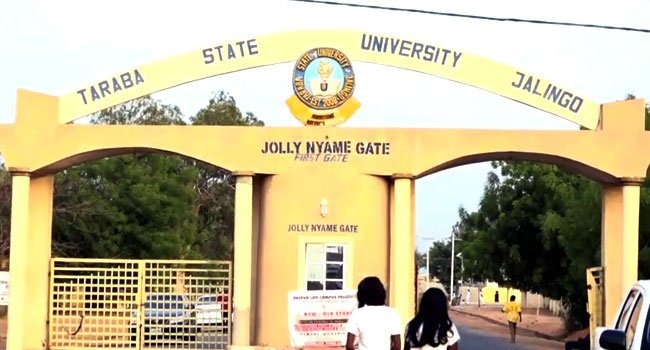
For students of Taraba State University (TSU), Jalingo, the new academic day begins with a question that has become increasingly difficult to ignore: will the classroom remain open and uninterrupted, or could another dispute between lecturers and the government eventually disrupt academic activities?
That uncertainty followed the latest decision by the Academic Staff Union of Universities (ASUU), TSU Branch, to issue a final 14-day ultimatum to the Taraba State Government over outstanding provisions of the Federal Government/ASUU 2025 Agreement.
The ultimatum, which commenced on September 14 and runs until September 28, 2026, places renewed pressure on the state government to address the issues the lecturers say remain unresolved.
For the university community, the development is more than another exchange between a workers’ union and government. It has the potential to affect lecturers, students, parents and the wider academic calendar if dialogue fails and the dispute escalates.
The notice was contained in a statement signed by the Chairman of ASUU-TSU, Dr Joshua Garba Mbave, and made available to journalists in Jalingo.
The union did not immediately declare industrial action. Instead, it gave the government another 14 days to demonstrate its commitment to implementing the outstanding provisions of the 2025 agreement.
ASUU-TSU said it could consider “lawful measures” to protect the interests of its members should the outstanding matters remain unresolved after the September 28 deadline.
The phrase leaves the door open for further engagement, but it also signals that the union believes patience is running thin.
On August 13, 2026, the university chapter had issued another 14-day ultimatum to Governor Agbu Kefas and the Taraba State Government, demanding full implementation of the agreement and warning of possible industrial action.
That ultimatum expired on August 26 without what the union described as concrete and verifiable action.
Yet, rather than immediately shut down academic activities, the union held back, citing the university’s combined convocation ceremony scheduled within the period.
The new deadline has therefore shifted attention from whether ASUU will act to whether the government can resolve the outstanding issues before September 28.
Between appreciation and pressure
Interestingly, the union’s latest statement was not entirely confrontational.
ASUU-TSU acknowledged what it described as efforts by the Taraba State Government to address issues affecting the university and recognised its commitment to industrial harmony and dialogue.
“While we acknowledge the Government’s commitment to industrial harmony and dialogue, we wish to note that some key provisions of the Agreement remain outstanding and require urgent attention,” the union stated.
It added: “We appreciate the efforts of the Taraba State Government towards addressing issues affecting the University and implementing the FGN/ASUU 2025 Agreement.”
The union appears unwilling to close the door on negotiation, but at the same time wants the government to move beyond assurances and take what it considers concrete steps towards implementation.
“Consequently, ASUU-TSU issues a final 14-day notice effective from 14th September, 2026, to 28th September, 2026, urging the government to take concrete steps toward full implementation of the outstanding provisions,” the statement said.
The union added that it remained committed to peaceful engagement and constructive dialogue but “may consider lawful measures to protect members’ interests if the issues remain unresolved after the expiration of the notice.”
At the centre of the dispute are outstanding provisions of the 2025 Federal Government/ASUU Agreement which ASUU-TSU says have yet to be fully implemented at the state-owned university.
Although the union did not list all the outstanding provisions in the statement, its demand for full implementation suggests that the disagreement is tied to the practical application of commitments affecting academic staff and the university system.
For the university community, the consequences of a prolonged dispute could extend beyond the negotiating table.
Students depend on uninterrupted lectures, examinations and academic calendars to complete their programmes on schedule. Parents and guardians, meanwhile, bear the financial and emotional consequences whenever academic activities are disrupted.
Lecturers also have a stake in the outcome, particularly where unresolved agreements affect their working conditions and confidence in the institution.
This explains why the union is appealing to all stakeholders to support efforts aimed at maintaining a stable and productive academic environment.
Tl
The latest ultimatum has effectively created a new countdown.
Between September 14 and September 28, the government and the union have an opportunity to return to the negotiating table, narrow their differences and prevent the disagreement from becoming another disruption in the university system.
ASUU-TSU has expressed hope that the government will respond promptly to its demands and sustain stability and uninterrupted academic activities.
But if the deadline passes without an acceptable resolution, the situation could enter a more difficult phase.
The union has already made clear that it reserves the right to take lawful steps to protect its members’ interests.
For now, however, the classrooms remain open, lectures continue and dialogue remains possible.
The immediate challenge for both sides is to ensure that the latest ultimatum does not become another chapter in a cycle of warnings and expired deadlines.
For the students of Taraba State University, the hope is simple: that the disagreement will be resolved around the negotiating table rather than in the classroom, and that the September 28 deadline will mark the end of the dispute—not the beginning of another disruption.