

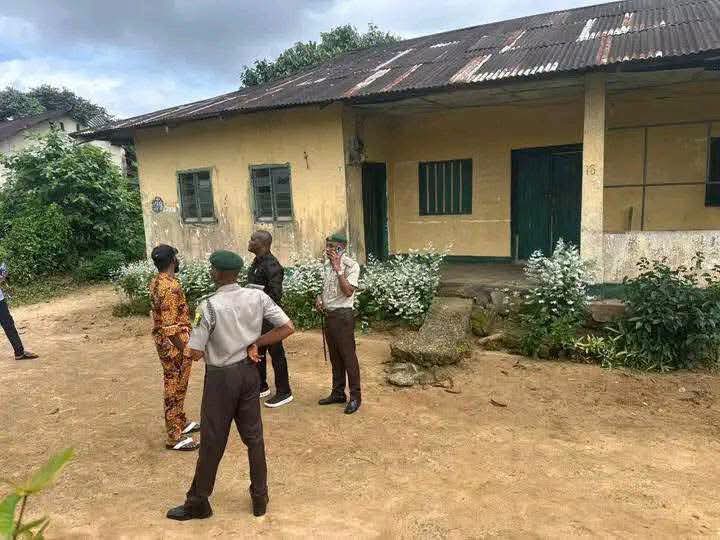
The condition of infrastructure at the Nigerian Correctional Service (NCoS), Eket Command, Akwa Ibom State, has come under scrutiny following an on-the-spot assessment that revealed badly deteriorated roofs, ageing buildings, dilapidated staff quarters and a damaged escort vehicle within the facility.
The assessment showed sections of the correctional centre with rusted and battered roofing sheets, exposed rafters and walls bearing visible signs of water infiltration. A correctional service escort van parked within the premises was also observed in a non-operational condition, with a damaged front section, corroded bodywork and flat tyres.
The findings have raised concerns about the capacity of the command to provide adequate infrastructure and transportation for its day-to-day operations.
One of the most visible challenges observed during the assessment was the condition of the escort vehicle. The van, located within the command, appeared unserviceable, with extensive corrosion, damage to its front section and deflated tyres.
Officials and sources familiar with the situation reportedly said the command currently faces difficulties transporting inmates to court because of the lack of a functional escort vehicle.
More than 40 awaiting-trial inmates are reportedly affected by the transportation challenge, with concerns that difficulties in conveying inmates to court could contribute to delays in the processing of their cases.
However, the precise number of cases affected and the extent to which transportation challenges have caused adjournments or delays could not be independently established as of the time of filing this report.
The physical condition of some of the command’s buildings was also evident during the inspection. Several roofs were visibly rusted and patched with different roofing materials, while some sections showed exposed structural components. Water stains were visible on parts of the walls, consistent with prolonged exposure to leaking roofs.
The observations point to significant maintenance needs within portions of the facility. The assessment also drew attention to the condition of accommodation used by some correctional officers.
According to reports from the command, some officers are occupying mud-block structures believed to have been built before Nigeria’s independence in 1960.
The buildings observed during the visit had visibly deteriorated walls and ageing roofs. Some sections appeared to have been patched with zinc sheets and tarpaulin, while certain doorways lacked conventional fittings.
The claim that the structures predate independence, however, would require confirmation from official records.
A delegation of senior officers was seen inspecting some of the affected buildings during the visit.The inspection provided an opportunity to assess the condition of the structures and other facilities being used by personnel.
Sources within the command said officers have repeatedly raised concerns over the state of the infrastructure and the lack of functional transportation, calling for intervention from the appropriate authorities.
The concerns centre on the need to rehabilitate ageing structures, improve staff accommodation and provide operational vehicles capable of supporting the command’s custodial and court-related responsibilities.
The condition of the escort vehicle is particularly significant because correctional authorities are required to facilitate the appearance of inmates before courts when directed.
Where transportation is unavailable, court attendance can become more difficult to coordinate, although the specific impact on individual cases at Eket could not be independently verified.
For awaiting-trial inmates, the issue is therefore not simply one of transportation but potentially one that intersects with the administration of justice.
The reported presence of more than 40 inmates awaiting trial at the command highlights the need for authorities to establish whether transportation constraints are affecting their court appearances and case progression.
Stakeholders familiar with the situation have called for urgent rehabilitation of the affected buildings, improvement of staff accommodation and the provision of a functional escort vehicle for the Eket Command.
They argue that correctional infrastructure requires sustained maintenance to ensure that custodial facilities remain secure, functional and suitable for both inmates and personnel.
The situation also underscores the importance of regular assessment and maintenance of correctional facilities, particularly structures that have been in use for several decades.
As of press time, the headquarters of the Nigerian Correctional Service and the Federal Government had not issued an official statement on the condition of the Eket Command or the reported transportation challenges.
Until an official assessment is made public, the deteriorated roofs, ageing structures and apparently unserviceable escort vehicle observed at the facility remain the clearest indicators of the infrastructure challenges confronting the command.