

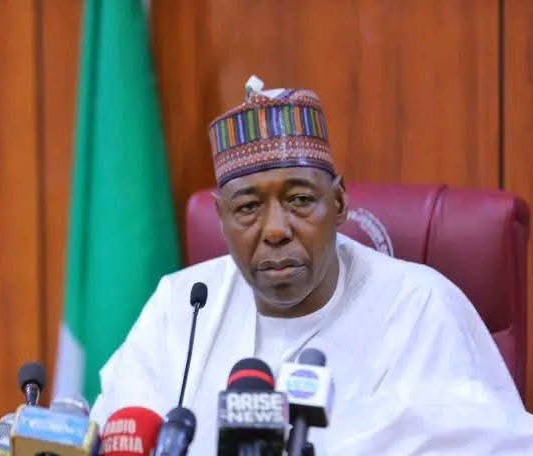
Borno state governor, Prof. Babagana Umara Zulum, has called for transparency and inclusiveness in the implementation of the $1 billion Household Prosperity and Empowerment Social Protection Project (HOPE-SP), warning that improper selection of beneficiaries could undermine the programme’s objectives.
Zulum made the call during the official launch of the HOPE-SP programme, themed “From Palliative to Pathways,” organised by the Federal Ministry of Humanitarian Affairs and Poverty Reduction in Abuja.
The initiative was unveiled by Nigeria’s First Lady, Senator Oluremi Tinubu, at the Banquet Hall of the State House.
The governor commended President Bola Ahmed Tinubu for introducing the programme, describing it as an important intervention capable of addressing some of the socio-economic factors fuelling insecurity and insurgency in the country.
Zulum noted that poverty, illiteracy and social inequality remained among the root causes of insurgency and instability globally, including in Nigeria.
He stressed that military action alone could not permanently resolve the country’s security challenges, calling for greater attention to the socio-economic and political dimensions of insecurity.
“The kinetic measures alone will not end the insurgency. Addressing the socio-economic and political dimensions of the crisis is critical to addressing insecurity challenges in Nigeria,” he said.
The governor assured the Federal Government of the commitment of subnational governments to supporting the successful implementation of the programme.
However, he identified poor implementation and ineffective beneficiary selection as major challenges that could undermine social intervention programmes.
He urged the Ministry of Humanitarian Affairs and Poverty Reduction and the relevant implementing agencies to adopt clearly defined vulnerability criteria to ensure that assistance reaches Nigerians who genuinely need it.
“I want to call upon the Ministry of Humanitarian Affairs to ensure that targeted beneficiaries are selected based on certain vulnerability criteria that will ensure inclusivity,” Zulum said.
Speaking on behalf of Nigerian governors, Zulum said sustainable peace and security could only be achieved through interventions that go beyond short-term humanitarian assistance to address the underlying conditions that make individuals and communities vulnerable.
He expressed optimism that the HOPE-SP programme would make a meaningful difference in the lives of vulnerable Nigerians and strengthen the country’s social protection system.
The HOPE-SP initiative is designed to shift Nigeria’s social protection approach from short-term palliatives towards sustainable pathways for lifting vulnerable households out of poverty.