

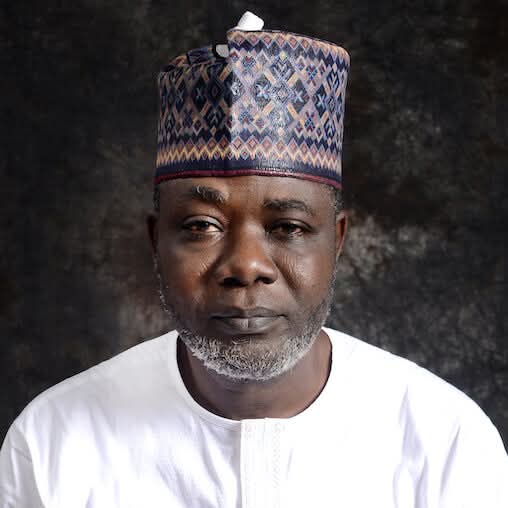
By Disu Kamor
There are moments when a nation’s silence says more than its speeches. Last week at the United Nations was one of them. For years I have introduced myself in rooms around the world as a Nigerian, and I have done so with a certain inherited pride. Not pride in our perfection, but pride in our posture. We were the country that once told the world, at great cost to itself, where it stood. We were the country that severed ties, nationalised oil companies, lost contracts and risked isolation because we believed that freedom in Southern Africa and freedom in Palestine were not foreign causes, but our own.
So when the organisation I chair, the Muslim Public Affairs Centre, issued a press release last week asking why Nigeria’s address to the 81st United Nations General Assembly could not find a single sentence for Palestine, I felt it personally, not just institutionally.
Because twelve months earlier, at UNGA 80, Nigeria had not whispered. It had spoken, and spoken clearly. It spoke about the devastation in Gaza. It condemned violence and aggression against innocent civilians. It looked the world in the eye and declared, “without stuttering and without doubt,” that a two-state solution remained the path to lasting peace, and that the people of Palestine are not collateral damage but human beings, equal in worth, entitled to the same freedoms we take for granted.
MPAC’s release laid out the record: last year’s clarity, this year’s erasure, the Security Cooperation Agreement with Israel signed quietly in August 2025 in between, the Joint Commission, the intelligence deals, and our three demands- join South Africa’s genocide case at the ICJ, make security cooperation conditional on accountability, and next time nations walk out when Netanyahu speaks, let Nigeria walk with them. I stand behind every word.
But this article is not that press release. This is what that silence has weighed on me as a Nigerian who was raised on the memory of a different Nigeria, and who fears we are now spending down a moral inheritance we did not earn, and will struggle to recover once it is gone.
Fifty years ago this January, a young Nigerian Head of State stood before his fellow African leaders in Addis Ababa and said five words that outlived him by half a century. General Murtala Mohammed, addressing an Extraordinary Session of the Organisation of African Unity convened to decide where Africa would stand on Angola’s liberation, rejected a letter from the American government pressuring Nigeria to side with apartheid South Africa. “Africa has come of age,” he told them. Thirty-four days later, he was dead, assassinated in a coup attempt, having spent the last months of his life turning that declaration into policy rather than leaving it as a line for historians to admire.
This year, the fiftieth anniversary of that declaration, I watched Nigeria’s national statement at the United Nations General Assembly run to twenty-four paragraphs- Security Council reform, climate finance, artificial intelligence, debt architecture, counter-terrorism in the Sahel- without once naming Gaza, or Palestine, or the two-state solution Nigeria itself had insisted on just a year before. I do not think that is a small thing.
I think it is a rupture. I grew up understanding Nigeria as a country that put its resources where its convictions were, not merely its rhetoric. This is not nostalgia. It is documented history, and it deserves to be told again because too few Nigerians under fifty have ever been taught it.
Under Murtala and his successor Olusegun Obasanjo, Nigeria funnelled oil revenue to liberation movements across the continent- the MPLA in Angola, ZANU and ZAPU in Zimbabwe, the ANC and PAC in South Africa, SWAPO in Namibia.
Nigeria led the rejection of South Africa’s Bantustan system at the UN General Assembly in 1975 and donated $500,000 to SWAPO, granting it office space in Lagos. When Obasanjo’s government discovered that Nigerian crude, sold through British Petroleum, was indirectly reaching apartheid South Africa’s refineries, Nigeria nationalised BP’s entire Nigerian operation in 1979 rather than let its oil serve a racist regime even by accident.
When Margaret Thatcher’s government moved to ease sanctions on Rhodesia, Obasanjo pulled British contracts from Lagos’s Apapa port and threatened to leave the Commonwealth, pressure credited with contributing to Robert Mugabe’s election victory in 1980. Nigeria went on to chair the UN’s Special Committee Against Apartheid until 1994.
And on Palestine specifically, Nigeria did not merely speak. It paid a real, sustained cost. When the Yom Kippur War broke out in 1973, Nigeria, in solidarity with the Organisation of African Unity and the Arab world, severed diplomatic relations with Israel entirely.
That severance held for nearly two decades, across multiple changes of government, before ties were restored in 1992. An entire generation of Nigerian diplomats came of age in a country that had decided that Palestinian self-determination was worth nineteen years of severed ties.
That history is what makes this year’s silence so difficult to bear, because what Nigeria was silent about is not abstract. It is a living catastrophe now in its eighth decade. It began with the Nakba in 1948, when some 750,000 Palestinians were expelled from their homes during the creation of the State of Israel. What followed in 1967, after the Six-Day War, was a military occupation of the West Bank, including East Jerusalem, and the Gaza Strip that has never ended.
For fifty-eight years, Palestinians in those territories have lived under military law while Israeli settlers in the very same land live under civil law, their settlements expanding, their roads segregated, their movement controlled by checkpoints and walls. In July 2024, the International Court of Justice declared that this occupation itself is unlawful, that it amounts to racial segregation and apartheid, and that it must end.
Within that occupation, violence has never been episodic. It has been a pattern. Palestinians remember Deir Yassin and Tantura in 1948, Khan Younis and Rafah in 1956, Sabra and Shatila in 1982 when Israeli forces encircled Palestinian refugee camps in Beirut while allied militias slaughtered thousands, the Ibrahimi Mosque in Hebron in 1994, Jenin in 2002, and the successive wars on Gaza in 2008-09, 2012, 2014 and 2021, each leaving thousands dead, overwhelmingly civilian.
But what has happened in the last three years has no parallel. Since October 2023, Gaza has endured a war that UN agencies and courts now describe in terms of genocide. In less than three years, more than 65,000 Palestinians have been killed, the majority women and children, and more than 120,000 wounded. Almost the entire population of 2.3 million has been forcibly displaced, many ten times over. The United Nations has documented the systematic destruction of hospitals, of every university in Gaza, of schools sheltering displaced families, of mosques, churches, bakeries and water plants. UN experts, Amnesty International, Human Rights Watch and Israeli human rights groups have documented the blocking of food, water, medicine and fuel as a weapon of war. It is this record that led South Africa to bring its case under the Genocide Convention to the International Court of Justice in December 2023.
And for the first time, accusation has moved to indictment. On November 21, 2024, the International Criminal Court issued arrest warrants for Prime Minister Benjamin Netanyahu and former Defence Minister Yoav Gallant for war crimes and crimes against humanity, including using starvation as a method of warfare, murder, persecution and intentionally directing attacks against civilians. The sitting prime minister of a state with which our government signed a Security Cooperation Agreement in August 2025 is now wanted in 125 member states.
I cannot reconcile the Nigeria under Murtala and Obasanjo with the one that could not find a single sentence for Palestine this year while, rather unbothered, got busy signing discreet pacts and agreements with an apartheid and genocidal state as recently as March 2026. I cannot reconcile it with the fact that when dozens of nations walked out of the General Assembly hall this year as Netanyahu spoke, Nigeria’s delegation remained seated.
And it was not just any walkout. When the footage came out, it was Africa itself that stood up. South Africa, Senegal, Botswana, Uganda, Namibia, Kenya, Ghana, Angola, Niger, Madagascar, Mozambique, Chad, Central African Republic, Liberia, Eritrea, Lesotho, Eswatini, Equatorial Guinea, both Congos- Republic of Congo and Democratic Republic of Congo- were among the African countries that walked out or refused to sit through that speech.
These are not marginal states. They include countries that fought apartheid alongside us, countries we trained, funded and housed. If Africa has come of age, as Murtala said fifty years ago, then Africa showed it last week. Nigeria, the country that once taught the continent how to stand, chose to remain seated.
I do not say this to manufacture hostility toward any state. Murtala’s generation did not act out of hostility either. They acted out of principle, and they paid whatever price principle demanded.
What troubles me is the gap between the courage that generation had when the cost was real, and the caution my generation settles for now that the cost is merely inconvenient. MPAC’s press release said what needed to be said institutionally. But I wanted to say this as one Nigerian to others: I was raised on the memory of a country that told the most powerful nation on earth it would no longer take orders from anyone. Fifty years later, having watched genocide beamed live on our screens, at the world’s most powerful podium, we managed silence instead.
Let me be clear about what this article is not calling for. It is not a call for Nigeria to once again funnel its oil revenue into the Palestinian cause of self-determination, as we did for Southern Africa five decades ago. The world has changed, and Nigeria’s burdens at home are heavy enough. What is in this article is a simpler, more urgent call: that Nigeria remembers that its moral standing is diminishing due to its romance with a state that is considered a pariah by the vast majority of the world’s nations, and finds the courage to re-earn it.
A nation does not inherit its moral standing and build on it through immoral dealings with a state openly engaged in war crimes and genocide, and then reacts with silence on the world stage. It re-earns it, decision by decision, generation by generation. Murtala’s generation earned theirs at real cost- with severed ties, nationalised assets, lost contracts and, ultimately, blood.
They did not do it for applause. They did it because they understood that justice could not be seasonal. They did it also for the simple reason that, as Rev. Dr. Martin Luther King Jr. wrote in his “Letter from Birmingham Jail”, “Injustice anywhere is a threat to justice everywhere.” I am not yet ready to accept that my generation should spend that inheritance in silence. And I do not believe most Nigerians are either, if they are given the full record and asked to judge for themselves.
Lastly, what is at stake here is bigger than Palestine alone. It is the independence of Nigeria’s foreign policy itself. That policy must never be outsourced, subcontracted, or dictated by any foreign capital, however powerful. It must be independent of foreign control and influence, and must reflect, first and foremost, the interests, the vision and the values of the Nigerian people. It must draw from the long history of our nation’s reputation- not as a follower of convenience, but as a champion of just causes.
What worries many Nigerians today is the growing impression that our foreign policy is no longer guided by that long, principled history, but is now at the mercy of a few individuals who have prioritised personal friendship and the influence of Israel over Nigeria’s reputation and historical values.
When private affinities and lobbying networks begin to shape national statements at the United Nations, when security deals are signed quietly while the National Assembly and the public are kept in the dark, we have departed from the Murtala doctrine. Foreign policy ceases to be Nigerian policy; it becomes the project of a few. Murtala understood this danger when he tore up that letter from Washington. Obasanjo understood it when he chose principle over BP. That is the tradition I am now calling on us to honour, not abandon. Nigeria must return to a foreign policy that is truly Nigerian- independent, people-centred, and anchored in justice.
Disu Kamor is the Executive Chairman, Muslim Public Affairs Centre (MPAC)