

By Disu Kamor
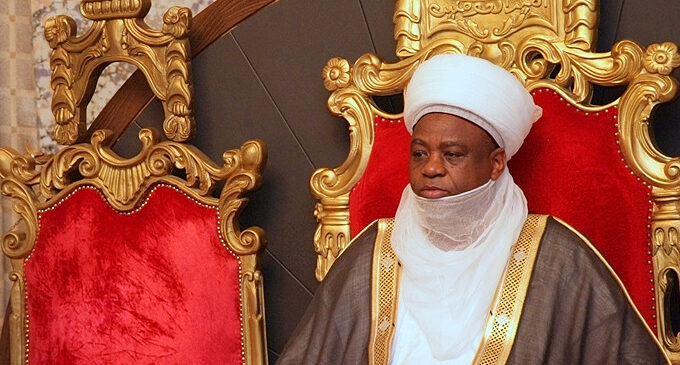
His Eminence, Alhaji Muhammad Sa’ad Abubakar III, CFR, mni, the 20th Sultan of Sokoto and President-General of the Nigerian Supreme Council for Islamic Affairs (NSCIA), clocks 70 this week, marking a milestone that goes beyond the celebration of a royal birthday.
The occasion offers an opportunity to reflect on two decades of leadership on the ancient throne of the Sokoto Caliphate and a lifetime of service to Nigeria, the Muslim Ummah and the cause of peaceful coexistence among the country’s diverse religious and ethnic communities.
Ten years ago, as the Sultan marked his first decade on the throne of his ancestor, Sheikh Usman Dan Fodio, he was described as a leader who had built “strong bridges of understanding and brotherhood” across Nigeria.
Twenty years into his reign and at 70, that assessment has evolved from promise into legacy.
Born in Sokoto in 1956, Sultan Sa’ad Abubakar pursued a military career before ascending the throne in 2006 following the death of his elder brother, Sultan Muhammadu Maccido. He had served in the Nigerian Army’s Armoured Corps, participated in peacekeeping operations and rose to the rank of Brigadier General.
That military background has continued to shape his approach to leadership, particularly his emphasis on discipline, dialogue, restraint and service to institutions larger than the individual.
A Sultan Beyond Regional Boundaries
The office of the Sultan of Sokoto carries a responsibility that extends far beyond the geographical boundaries of Northern Nigeria.
As President-General of the NSCIA, the Sultan occupies a central position in Nigeria’s Muslim leadership structure, bringing together Muslim communities across the North and South.
Over the past two decades, Sultan Sa’ad Abubakar has consistently advocated unity within the Nigerian Muslim Ummah, resisting attempts to divide Muslims along regional, sectarian or political lines.
His leadership has therefore been built around the conviction that the Muslim community must speak with a common voice on issues affecting faith, national development and peaceful coexistence.
Building Bridges Across Faiths
Perhaps the most prominent aspect of the Sultan’s national role has been his advocacy for Muslim-Christian dialogue.
At the height of the Boko Haram insurgency, when religious tensions threatened to deepen Nigeria’s divisions, Sultan Sa’ad Abubakar worked with Christian leaders, including the Catholic Archbishop of Abuja, Cardinal John Onaiyekan, to promote interfaith dialogue and discourage religious confrontation.
Their joint efforts earned them international recognition, including a nomination for the Nobel Peace Prize.
The Sultan has repeatedly maintained that Muslims and Christians are destined to coexist peacefully in Nigeria and that dialogue remains preferable to violence.
His message has remained consistent: religious differences should not become instruments for destroying the unity of the country.
Through the Nigeria Inter-Religious Council (NIREC) and other platforms, he has continued to advocate mutual respect, understanding and peaceful engagement between followers of the two major faiths.
A Voice of Restraint in Difficult Times
Sultan Sa’ad Abubakar’s influence has also been evident during periods of political and security tension.
From the Boko Haram insurgency to the persistent challenges of banditry and communal violence, he has consistently called on governments, security agencies, traditional rulers and citizens to work together rather than allow insecurity to deepen mistrust among communities.
His approach has often been characterised by restraint and behind-the-scenes engagement rather than confrontation.
In a country where provocative rhetoric can quickly inflame existing tensions, the Sultan’s preference for dialogue has positioned him as an important voice for stability.
His national stature has been recognised by political leaders across party lines.
President Bola Tinubu described him as a stabilising voice during turbulent periods, a bridge-builder across faiths and communities, and a moral compass for both the Muslim Ummah and the nation.
Former Vice President Atiku Abubakar also hailed him as a symbol of wisdom, unity and peaceful leadership, while Katsina State Governor Dikko Radda described him as a bridge-builder whose voice commands respect across the country.
Such tributes reflect the extent to which the Sultan’s influence has transcended the traditional institution he represents.
From Soldier to Royal Father
The Sultan’s moral authority is not based solely on his royal heritage.
Before becoming Sultan, he spent decades in military service, including peacekeeping duties in Africa. That experience exposed him to the complexities of leadership, conflict management and the importance of maintaining institutional discipline.
When he succeeded Sultan Muhammadu Maccido in 2006, he inherited one of Africa’s most historic traditional institutions.
The Sokoto Caliphate, founded through the reform movement led by Sheikh Usman Dan Fodio, once extended across a vast territory and brought together numerous emirates and communities.
Sultan Sa’ad Abubakar has carried that historical responsibility into modern Nigeria, adapting the traditional institution to a country confronting terrorism, religious tensions, political disagreements, poverty and social divisions.
For several years, Sultan Sa’ad Abubakar has been listed among the world’s most influential Muslims in The Muslim 500, published by the Royal Islamic Strategic Studies Centre in Jordan.
The recognition reflects not only his position as the spiritual leader of millions of Nigerian Muslims but also his engagement with issues of religious harmony, peace and responsible leadership.
Perhaps the defining feature of Sultan Sa’ad Abubakar’s 20-year reign has been his commitment to unity.
His leadership has demonstrated that traditional authority can remain relevant in a modern democracy when it is used to promote peace, dialogue and social cohesion.
At 70, and after two decades on the throne, Sultan Sa’ad Abubakar III is therefore more than the custodian of a historic institution. He has become one of Nigeria’s most prominent voices for religious tolerance, national unity and peaceful coexistence.
His journey from the Nigerian Army to the throne of Sokoto has been marked by service to country, faith and humanity.
As he celebrates his 70th birthday, millions of Nigerians, Muslims and Christians alike, can look back on a reign defined by bridge-building and a consistent call for Nigerians to resist division.
May the Almighty grant His Eminence continued good health, wisdom and strength to continue serving the nation and the Muslim Ummah.
May the bridges of understanding he has spent decades building remain strong for generations to come.
Disu Kamor is Executive Chairman of the Muslim Public Affairs Centre (MPAC) Nigeria.