

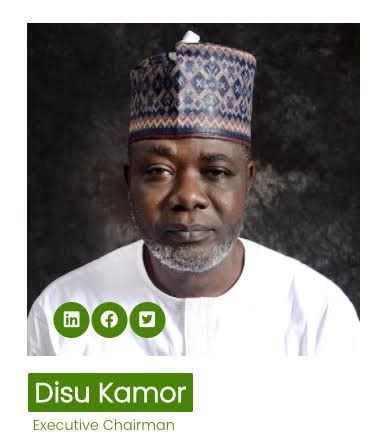
By Disu Kamor,
On the morning of Tuesday, May 12, 2026, operatives of the Economic and Financial Crimes Commission stormed the University of Uyo Teaching Hospital in Akwa Ibom State. Their target was Professor Eyo Effiong Ekpe, Deputy Chairman of the hospital’s Medical Advisory Committee and, by most accounts, the only practising cardiothoracic surgeon in the entire state. According to a medical worker at the hospital, the officers arrived after 9 a.m. while the professor was in the middle of an operation and asked them to wait; they refused, dragging him from the theatre, brutalising him, and hauling him along the ground into their vehicle. Hospital security locked the gates to prevent the operatives’ exit, and the ensuing standoff shut down activities at the hospital entirely.
Hospital sources alleged the aggression stemmed from delay in issuing a death certificate connected to an EFCC member, while the Commission maintained it was acting on correspondence dating back to March and April 2026 seeking authentication of a medical report tied to a separate fraud case, and that its officers were themselves attacked with stones when they arrived to make further enquiries. Whichever account is accepted, one fact is undisputed: a state anti-graft agency invaded an operating theatre and forcibly removed a surgeon mid-procedure, over a paperwork dispute that any competent court, not a raiding party, ought to have resolved.
The Nigerian Medical Association condemned the operation in the strongest terms, describing it as evidence of gross indiscipline and faulty operational processes within the agency, and its Akwa Ibom chapter embarked on an indefinite strike that shut down medical services across the state. The state chapter called the raid “barbaric, degrading and inhumane,” insisting that hospitals must never become theatres of violence and intimidation. The association further alleged its own state chairman was shoved and exposed to teargas while attempting to seek clarification from the operatives, and threatened to sue the EFCC for ₦1 billion in damages if its demands for accountability went unmet. A patient lay on that operating table. Whatever became of that patient’s care is a question the EFCC’s statement did not answer, and the country has not been told.
Four months later, a graver tragedy unfolded in Niger State. On September 15 and 16, 2026, the Niger State Command of the Nigeria Security and Civil Defence Corps conducted what it called a “burst operation” against illegal mining around the M.I. Wushishi Housing Estate and Lukoto village, arresting 67 suspected artisanal miners. In the early hours of September 17, dozens of those detained were found dead inside NSCDC custody in Minna. A hospital staff member reported that management was not officially informed before the bodies arrived from NSCDC command headquarters in two ambulances, and that seven other victims were admitted to the emergency unit in severe condition. The bodies were reportedly laid out on the floor of the mortuary as grieving relatives gathered.
The NSCDC’s first explanation was a suspected disease outbreak. Survivor accounts and an intelligence report shared with international media instead pointed to overcrowding and inadequate ventilation in the holding cell; as of September 19, laboratory findings confirming the true cause of death had still not been published. Niger State Governor Umaru Bago later disclosed that all 67 arrested persons had been crammed into a single cell by the state Civil Defence office. One survivor, Dauda Shehu, described the conditions bluntly: the detainees were packed so tightly into the cell that there was no air to breathe. Many of the dead, according to reporting, were teenagers and internally displaced persons who had turned to artisanal mining out of desperation, in a sector the state has never bothered to regularise. The deaths rank among the deadliest custodial incidents recorded in Nigeria in recent years, and have triggered parallel investigations by the police and the federal government, alongside the suspension of the state NSCDC commandant, Suberu Siyaka Aniviye, by the Interior Minister.
Sixty-seven human beings were arrested for an economic infraction- illegal mining- an offence that carries no capital consequence under any Nigerian statute. Thirty-seven of them never left custody alive. No court sentenced them to death. No judge signed a warrant of execution. They were killed by conditions of detention that a security agency of the Federal Republic of Nigeria created and controlled.
These two episodes, four months apart, are not aberrations. They are data points in an accelerating pattern in which agencies established by law to protect Nigerians have instead become instruments that endanger them, frequently in open disregard of judicial authority. That disregard is perhaps most vividly illustrated in the protracted detention of former Kaduna State Governor Mallam Nasir El-Rufai and the mistreatment his family says it has endured at the hands of the Department of State Services.
El-Rufai has remained in custody since February 18, 2026, after honouring an invitation from the anti-graft agencies. By May 18, his detention had reached 91 days without conviction. On that day, tension flared in Abuja as members of his family, including his second wife Asia, his political allies and supporters including Senator Lawal Adamu Usman representing Kaduna Central, staged a protest at DSS headquarters over what they described as his continued and unlawful detention. The core of their complaint is a direct violation of court orders. The family alleges that two subsisting orders from a Kaduna court directed that El-Rufai be remanded in the custody of the Independent Corrupt Practices and Other Related Offences Commission (ICPC). Yet on May 18, after Justice Joyce AbdulMalik of the Federal High Court granted him bail and stood the matter down until 1 p.m., DSS operatives allegedly took him into their custody during the court break.
His wife narrated his resistance in court: “I remember him saying ‘I am not going to step down because there are two court orders that the Kaduna court gave that I should be remanded in ICPC. Why are you bringing me here?’ He said that he is not a piece of furniture to be moved”. She recounted that he was briefly returned to ICPC only to be taken again to the DSS after the afternoon session when prosecution sought an adjournment, at which point he refused to step out of the vehicle.
Beyond custody-shopping, the family alleges a campaign of intimidation against them. “We now live in constant fear. Every day we get a threat- DSS, ICPC and police are coming to raid your house. You are being followed. Our phones are tapped,” his wife told journalists outside the DSS facility.
The family further alleges denial of medical access despite court orders for unrestricted access to his personal physicians. They claim the ICPC’s own doctor agreed his personal doctors would discuss test results with him, an agreement they say was later disregarded. El-Rufai’s son, Hon. Bello El-Rufai, a member of the House of Representatives, has described the bail conditions- including attestation by the Kaduna State Council of Chiefs and a Grade Level 17 officer with N100 million property in Asokoro or Maitama- as deliberately impossible, asking publicly: who keeps a person for 91 days?
Here, in one case, is the entire pattern: a citizen held for months on the strength of a 14-day magistrate remand, subsisting High Court orders on custody allegedly ignored, bail granted but made illusory, a family subjected to surveillance and threats, and two federal agencies trading a detainee between them as though he were, indeed, furniture.
Consider the treatment of court orders themselves more broadly. In June 2026, the Department of State Services was accused of a violent abduction of activist Omoyele Sowore in Abuja, with the rights group RULAAC noting that the incident recalled earlier instances in which security agencies allegedly disregarded court orders in politically sensitive cases, and warning that such conduct reinforces the perception that some state institutions consider themselves above the law. RULAAC was direct on the constitutional point: an agency created by statute cannot substitute its own judgment for that of a competent court, and where a lawful custody order exists, every arm of government is bound to obey it unless a superior court overturns it. That is not an isolated allegation. Civil society organisations have repeatedly alleged that the DSS ignores judicial rulings ordering the release of detainees or the return of seized property, and the family of a former state governor separately accused the agency of disregarding a subsisting court order concerning his detention. On the very day a Federal High Court judge restored Sowore’s bail with fresh conditions, journalists and members of the public attempting to attend the hearing were turned away, raising the question of whether the restriction was a deliberate policy rather than an isolated lapse.
Separately, the Socio-Economic Rights and Accountability Project (SERAP) accused DSS officials of unlawfully occupying its Abuja and Lagos offices after the organisation called for an investigation into alleged corruption at the national petroleum company.
The pattern extends beyond the intelligence and anti-graft agencies into the conventional police force. In Effurun, Delta State, a police officer identified as Nuhu shot and killed a young man, Mene Ogidi, at point-blank range after the victim had already been restrained and tied to the ground, disregarding the law even as his victim pleaded for his life and offered to lead officers to where a disputed package had been picked up. It took a bystander’s video, circulated on social media, before the officer was arrested and transferred for disciplinary action. Without that footage, it is reasonable to ask whether any action would have followed at all.
Taken individually, each of these episodes might be dismissed as the excess of a rogue operative or an overzealous unit. Taken together- a surgeon dragged from an operating table, sixty-seven citizens crammed into a single cell until thirty-seven of them died, a former governor held for 91 days while agencies defy court orders on his custody and his family alleges daily threats and phone tapping, an activist allegedly abducted in defiance of a court, a civil society office allegedly occupied without lawful authority, a restrained man shot dead by the officer meant to arrest him- they describe something structural: a security and law-enforcement architecture that has learned it can act first and account for itself later, if at all.
It is worth noting, in fairness, that not every recent signal has pointed in this direction. The current DSS Director-General, Oluwatosin Ajayi, has publicly directed operatives to refrain from arresting anyone over civil matters, citing instances in which the agency chose to approach the courts rather than make arrests, including a case in which SERAP itself was awarded more than ₦100 million in damages after operatives were accused of invading its premises. That such a directive is necessary, and newsworthy, is itself an admission of how far practice has drifted from principle. However, a directive is not a structural reform, and a policy statement does not undo a death in custody. The test of any such reform is not what an agency says it will now do, but whether the families of the Minna dead, and Professor Ekpe’s patients, and the family of Mallam El-Rufai, ever see justice for what has already been done.
I write as a Muslim, and as someone who has spent much of his public life working within and around questions of governance, and I cannot survey these events without measuring them against the standard my faith sets for those who hold authority over others. That standard is exacting, and it offers Nigeria’s security establishment no shelter. Islamic political thought does not conceive of authority as possession. It conceives of it as amanah- a trust. “Indeed, Allah commands you to render trusts to whom they are due, and when you judge between people, to judge with justice” (Qur’an 4:58). A trust, by definition, is held on behalf of another and is answerable to the one who conferred it. An officer who arrests, detains, or uses force does so as a trustee of the public’s safety and dignity, not as the possessor of unaccountable power over the bodies of citizens. When sixty-seven people are confined to a single cell until more than half of them die, when a former governor is shuttled between cells in defiance of a judge’s order while his family lives under alleged surveillance, that trust has not merely been strained; it has been abandoned. The Qur’an’s command on justice admits no exception for convenience or institutional self-interest: “O you who believe, stand firmly for justice, as witnesses to Allah, even if it be against yourselves, your parents, or your relatives” (Qur’an 4:135). Justice in the Islamic tradition is not contingent on who is inconvenienced by it- not the EFCC’s investigative timetable, not the NSCDC’s operational reputation, not the comfort of any institution. It is owed to the surgeon dragged from his theatre and to the miner suffocated in a cell and to the former governor denied his court-ordered custody with equal and undiminished force.
The Prophet Muhammad (peace be upon him) made the accountability of the one who governs a matter of direct personal responsibility, not abstraction: “Each of you is a shepherd, and each of you is responsible for his flock” (Sahih al-Bukhari, Sahih Muslim). A shepherd who allows his flock to perish through neglect of their basic needs- air, space, water, humane conditions- has failed the very purpose of his appointment, whatever operational justification he offers afterward. This is precisely the standard by which the custodians of that Minna cell, and the officers who decide to move a detainee against a court order, must be judged, and by which they will be judged if this life affords them no reckoning.
Islamic governance also has a long and specific tradition of holding rulers and officials to public account, not shielding them from it. Caliph Umar ibn al-Khattab, whose era is remembered in the Islamic tradition as a benchmark of just governance, was known to subject his own governors to public questioning and to remove them the moment evidence of abuse emerged; he famously declared that if an animal stumbled on the banks of the Euphrates, he feared Allah would hold him, as ruler, accountable for it. Caliph Ali ibn Abi Talib’s letter of instruction to his governor Malik al-Ashtar- among the most cited texts in the Islamic literature on governance- commands the ruler to guard against oppressing the ruled, warns that “the tears of the oppressed will not be checked by anything except justice,” and instructs that officials who wrong the people must be dealt with firmly and without favour, precisely because power that goes unchecked corrupts both the office and the state. These are not marginal texts in the Islamic tradition; they are foundational to how Muslims are taught that legitimate authority must conduct itself.
By these standards- trust rather than domination, justice without partiality, personal responsibility for those in one’s custody, and rulers who welcome scrutiny rather than evade it- the events in Uyo and in Minna and in Abuja represent a governance failure that should trouble every person of conscience, Muslim or otherwise, but which speaks with particular force to those of us who understand leadership as an amanah we will answer for before God. Impunity is not merely a legal or constitutional defect. In the moral vocabulary I was raised in, it is a betrayal of trust of the gravest kind, because it is a betrayal committed against people who had no power to defend themselves against the very institution charged with their protection.
None of this stands outside Nigeria’s own positive law, either. Section 34 of the Constitution guarantees every person the right to dignity of the human person and the right not to be subjected to torture or to inhuman or degrading treatment. Section 35 guarantees personal liberty, permitting detention only in accordance with a procedure permitted by law, and requiring that any person restrained be treated with humanity and with respect for the inherent dignity of the human person. Section 6 vests judicial power in the courts, not in the discretion of arresting officers. Every officer of every security agency swears an oath to defend this same Constitution. A nation’s security architecture exists to protect the citizen from harm. When the architecture itself becomes the source of harm- when a hospital patient is put at risk because officers cannot wait for a surgery to end, when sixty-seven citizens are locked into a space so cramped that more than half of them do not survive it, when a former governor’s family says they live in constant fear of raids and tapping while court orders on his custody are treated as suggestions- the constitutional bargain between citizen and state has been broken. No nation can long survive, and no government, however sincere its stated intentions, can claim legitimacy, when its agencies and officials act outside the very law and the very moral order they were established to uphold.
I make the following appeal to the Federal Government, not as the position of any organisation, but as a Nigerian citizen, a Muslim, and someone who believes this country cannot continue to absorb tragedies of this kind without consequence. First, that the deaths of the thirty-seven persons who died in NSCDC custody in Minna be investigated not as an internal administrative matter but as a potential mass custodial killing, with an independent, transparent, and time-bound inquiry whose findings and full forensic evidence are made public- not merely summarised in a press statement.
Second, that every officer and official found, on the evidence, to have caused or been criminally negligent in causing those deaths- whether through the conditions of detention, the failure to provide ventilation, water, or medical attention, or the decision to confine sixty-seven human beings in a single cell- be identified and prosecuted under the full weight of Nigerian law, without regard to rank or agency affiliation.
Third, that the prolonged detention of Mallam Nasir El-Rufai be brought immediately into compliance with all subsisting court orders regarding custody and medical access, that his family be protected from intimidation and surveillance, and that the pattern of moving detainees between agencies after bail has been granted be investigated as contempt of court.
Fourth, that this accountability be dispensed speedily. Justice delayed in cases of this magnitude is justice denied twice over: once to the dead, and again to the living who must watch whether their state treats their lives as worth the trouble of a proper reckoning.
Fifth, that the pattern illustrated by the events in Akwa Ibom, in Minna, in Abuja, and in Effurun be treated as exactly that- a pattern- warranting a comprehensive, transparent review of the standard operating procedures, use-of-force protocols, and custodial conditions across the EFCC, the NSCDC, the DSS, and the Nigeria Police Force, with enforceable consequences for violations, not merely internal memoranda.
Nigeria’s security and anti-corruption agencies serve indispensable functions, and the vast majority of the officers within them discharge their duties honourably and often at great personal risk. It is precisely because these institutions matter that their conduct must be held to the standard our Constitution sets and to the standard of justice that every serious moral tradition, including the one I hold, demands of those entrusted with power over others. The families burying their sons from Minna, and the patients who depend on Professor Ekpe’s hands in Uyo, and the family of a former governor who says it now lives in daily fear while awaiting compliance with court orders, deserve nothing less than a state that polices itself as rigorously as it polices them.
By Disu Kamor, Executive Chairman, Muslim Public Affairs Centre (MPAC), kamor.disu@mpac-ng.org.