

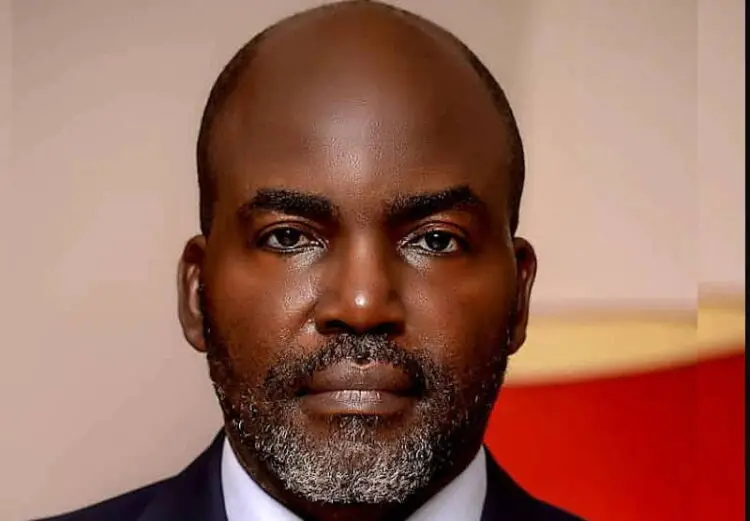
The governorship candidate of the Nigeria Democratic Congress (NDC) in Delta State, Deacon Chris Iyovwaye, has said the endorsement of Governor Sheriff Oborevwori by Urhobo traditional rulers cannot override the constitutional right of Deltans to choose their governor in the 2027 election.
Iyovwaye stated this in a statement issued on Saturday, September 12, 2026, in reaction to a communiqué by the Ukoko R’Ivie R’Urhobo, in which the traditional rulers expressed support for Oborevwori as the “sole candidate” of the Urhobo Nation.
The NDC candidate said he respected the traditional rulers and the institutions they represented as custodians of the history, culture and values of the Urhobo people.
He, however, maintained that traditional counsel should be distinguished from constitutional authority, stressing that the electorate retained the power to elect the governor through the ballot box.
“An endorsement, no matter how dignified its source, cannot supersede or extinguish Deltans’ democratic right to choose their leaders,” he said.
Iyovwaye, who described himself as a strong advocate of unity, said the governorship of Delta State was a responsibility owed to all residents of the state, irrespective of ethnic background.
He listed the Urhobo, Ijaw, Itsekiri, Isoko, Anioma and other communities as stakeholders in the state, arguing that the governorship should not be determined solely by ethnic consensus.
He challenged Deltans to scrutinise what he described as the key issues behind any political endorsement, including job creation, industrialisation, healthcare, education, infrastructure, support for businesses and economic diversification.
The NDC candidate also questioned the impact of the resources available to the state, citing the 2026 budget proposal, which he said projected total expenditure of ₦1.664 trillion.
According to him, the proposal included ₦720 billion from statutory allocation, ₦250 billion from internally generated revenue and ₦120 billion from Value Added Tax.
He argued that the central issue should not only be how much revenue the state receives, but what measurable economic and social benefits residents derive from the resources.
Iyovwaye also referenced Governor Oborevwori’s political alignment with the All Progressives Congress (APC), noting that the governor had publicly linked the decision to the need to align the state with the Federal Government.
He said the alignment created an obligation for the government to demonstrate tangible benefits to residents.
“Political alignment is not development. Budgets are not development. Contracts are not development. Development is measured by the extent to which government improves the lives and economic prospects of its people,” he said.
While acknowledging the state government’s reported investments in roads, bridges and other infrastructure, Iyovwaye said government expenditure should be assessed against measurable outcomes.
He questioned the number of sustainable private-sector jobs created, new industries established, improvements in the business environment, healthcare and education, as well as opportunities available to young people in the state.
“These are not partisan questions. They are questions every responsible government should be prepared to answer,” he said.
Iyovwaye said the 2027 election should focus on performance, accountability, competence and vision rather than endorsements, personalities and political arrangements.
He disclosed that he would seek an audience with the Ukoko R’Ivie R’Urhobo to present his political vision to the traditional rulers, adding that they deserved to hear from all serious contenders for the state’s leadership.
He also said he would continue his campaign across the state peacefully and declared that he would not withdraw from the governorship race.
“I respect our royal fathers. I respect Governor Oborevwori’s right to run. And above all, I respect the sacred right of every Deltan to choose,” Iyovwaye said.